
What will you learn?
As search engines add more features, users can often complete simple searches without visiting a webpage. Therefore, businesses need to think beyond clicks and focus on visibility, useful content, brand recognition, and qualified traffic. Google also provides search features such as featured snippets, AI features, product results, and other search appearances that can affect how websites are presented.
What Is Zero-Click Search?
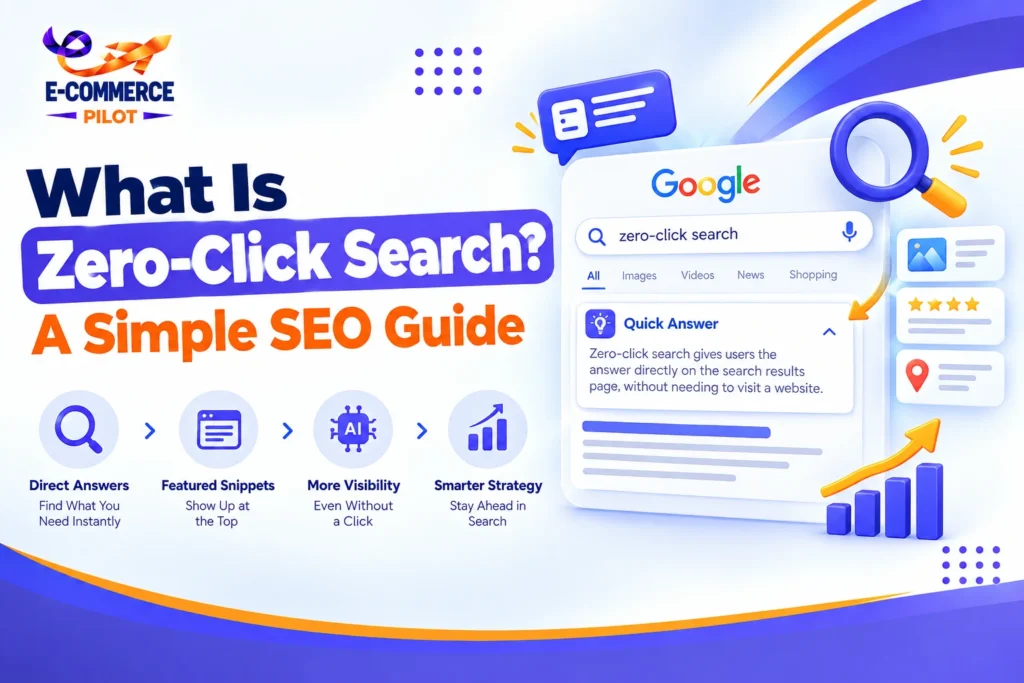
Zero-Click Search refers to a search where the user gets the required answer directly from the search results page. The user may see the information without opening a website.
For instance, Google can display a featured snippet, calculator, local information, product details, or other search features. As a result, the searcher may have no immediate reason to click a traditional organic result.
Zero-click searches are especially common for simple informational queries where a short answer satisfies the user’s search intent.
Common Zero-Click Search Examples
Several Google search features can provide information before a user visits a website. These features vary according to the query, device, location, and search context.
Common examples include:
- Featured snippets
- Knowledge panels
- Local results and business information
- Direct answers
- Calculator results
- Weather information
- Product information
- AI Overviews and other AI search features
Google’s documentation confirms that its search results can include many different appearance types, while AI features can provide previews using information from multiple sources.

Why Zero-Click Searches Matter for SEO
Zero-Click Search matters because traditional click-based SEO metrics do not show the entire picture. A website can gain visibility in search results even when a user does not immediately visit the site.
For example, a business may appear as a source, brand name, product result, or featured result. This exposure can support brand awareness and may influence future searches.
Therefore, SEO should focus on both traffic and search visibility. Businesses should also track impressions, queries, conversions, branded searches, and other relevant performance signals.
Zero-Click Search and Organic Traffic
Zero-click results can reduce clicks for some types of queries because the search engine answers the question directly. However, the effect depends heavily on search intent.
A user searching for a quick definition may not need a website visit. On the other hand, someone comparing products, researching services, or looking for detailed advice may still need a website.
For this reason, businesses should create content that gives a useful initial answer while providing enough depth to encourage the right users to continue reading.
How to Optimize for Zero-Click Search
You cannot control whether Google displays a zero-click result. However, you can structure your content so search engines can understand and use it more effectively.
Start by identifying questions your target audience asks. Then provide direct answers near the beginning of relevant sections. Follow those answers with supporting details, examples, comparisons, or practical steps.
Google also states that structured data helps it understand webpage content and can make pages eligible for certain search features, although structured data does not guarantee that a particular feature will appear.
Target Search Intent
Understanding search intent is central to a successful SEO strategy. Before creating content, determine whether the user wants an answer, product, service, comparison, guide, or local business.
Then build the page around that purpose.
Use:
- Clear questions as subheadings
- Short direct answers
- Supporting examples
- Relevant internal links
- Useful lists and tables
- Accurate product or service information
- Natural keyword variations
This approach can help your content serve users whether they need a quick answer or more detailed information.
Use Structured Data Carefully
Structured data can help search engines understand information such as products, reviews, offers, and other supported content types.
For ecommerce websites, product structured data can provide information such as price, availability, ratings, and reviews for eligible search appearances.
However, businesses should not add schema simply to chase a rich result. The markup should accurately represent visible page content and follow Google’s guidelines.
How Ecommerce Brands Can Handle Zero-Click Search
For ecommerce websites, Zero-Click Search can affect product discovery and informational searches. Users may see product prices, ratings, availability, or other information before opening a store.
Therefore, ecommerce brands should make important product information clear and accurate.
Focus on:
- Product titles and descriptions
- Search-friendly category pages
- Product and merchant structured data
- Helpful buying guides
- Comparison content
- Customer reviews
- Internal linking
- Strong brand signals
- Fast, mobile-friendly pages
Google’s merchant listing documentation notes that eligible product markup can support search experiences containing details such as price, availability, shipping, and return information.
Image suggestion: Ecommerce product search showing product name → price → reviews → availability → store page.
Measure More Than Clicks
A Zero-Click Search strategy should not rely only on click-through rate. Instead, evaluate several SEO signals together.
Google Search Console can help businesses monitor search performance, including impressions and clicks. Google has also clarified how AI Overviews are represented in Search Console reporting.
Track:
- Search impressions
- Organic clicks
- Click-through rate
- Search queries
- Branded searches
- Conversions
- Revenue from organic traffic
- Important landing pages
- Search visibility for target topics
This broader view helps you understand whether SEO is creating meaningful business value.
Is Zero-Click Search Bad for SEO?
Zero-Click Search is not automatically bad for SEO. Its impact depends on what the user searches for and what information appears in the results.
A direct answer may satisfy a simple query, while a complex commercial query may still require a website visit. Therefore, businesses should not try to avoid zero-click results.
Instead, create content that earns visibility while giving users a clear reason to continue to the website. Useful details, original insights, strong product information, comparisons, and relevant services can all support that goal.
Conclusion
Zero-Click Search is changing how users interact with search engines, but it does not make SEO irrelevant. Instead, it makes search visibility more important than clicks alone.
Businesses should create clear content, match search intent, use appropriate structured data, improve page experience, and measure both visibility and conversions. Google continues to support many search appearances and AI features, while its guidance still emphasizes helpful content and sound SEO practices.
If your website needs a stronger Zero-Click Search and SEO strategy, Ecommerce Pilot can help you improve content, technical SEO, website performance, and search visibility.
Want more visibility from every search? Talk to Ecommerce Pilot today and build an SEO strategy that turns search exposure into business growth.