
What will you learn?
What Is an Ecommerce Marketing Funnel?
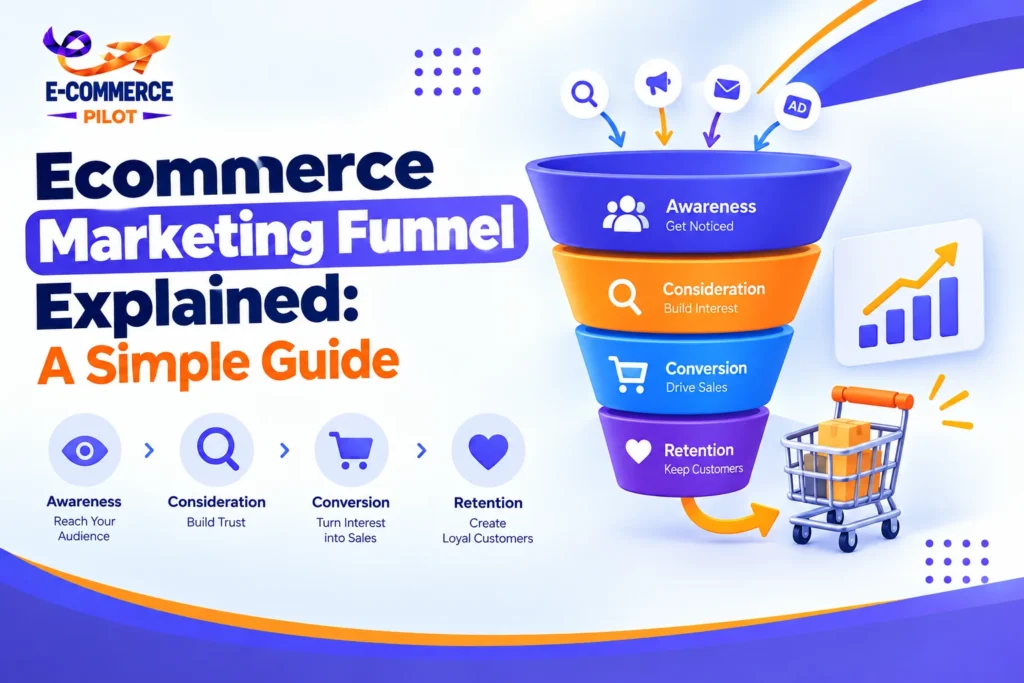
An ecommerce marketing funnel is a step-by-step view of the customer journey. It helps businesses understand what shoppers need before, during, and after a purchase. Therefore, each stage needs different content and marketing messages.
A typical funnel includes:
- Awareness
- Consideration
- Conversion
- Retention
The marketing funnel gives your team a clear way to connect traffic with sales. Instead of treating every visitor the same, you can respond to their current level of interest.
Why Online Stores Need a Marketing Funnel
Online shoppers often compare several stores before purchasing. They may read reviews, check prices, visit product pages, and leave the website before returning later. Because of this, a marketing funnel helps businesses stay connected throughout the buying journey.
It can help you:
- Attract relevant visitors
- Build customer trust
- Guide product research
- Reduce purchase friction
- Increase repeat purchases
Main Stages of the Funnel
The awareness stage attracts potential customers. Next, consideration helps them evaluate your products. Then, conversion encourages them to complete an order. Finally, retention focuses on keeping existing customers engaged.
Awareness Stage: Attract the Right Shoppers
The first stage of the marketing funnel focuses on people who may have a problem or need but are not ready to purchase. At this point, useful information matters more than a hard sales message.
SEO blog posts, social media content, videos, guides, and informational search queries can bring these shoppers to your website. Moreover, helpful content can introduce your brand while answering questions customers already have.
Marketing Funnel Strategies for Awareness
Your awareness strategy can include:
- SEO-focused blog content
- Social media posts
- Educational videos
- Informational landing pages
- Search advertising
- Helpful buying guides
The goal is to bring the right audience into the marketing funnel, not simply generate more visits.
Consideration Stage: Build Interest and Trust
During consideration, shoppers already have a stronger interest in a product or solution. However, they may still compare brands, prices, features, shipping policies, and customer feedback.
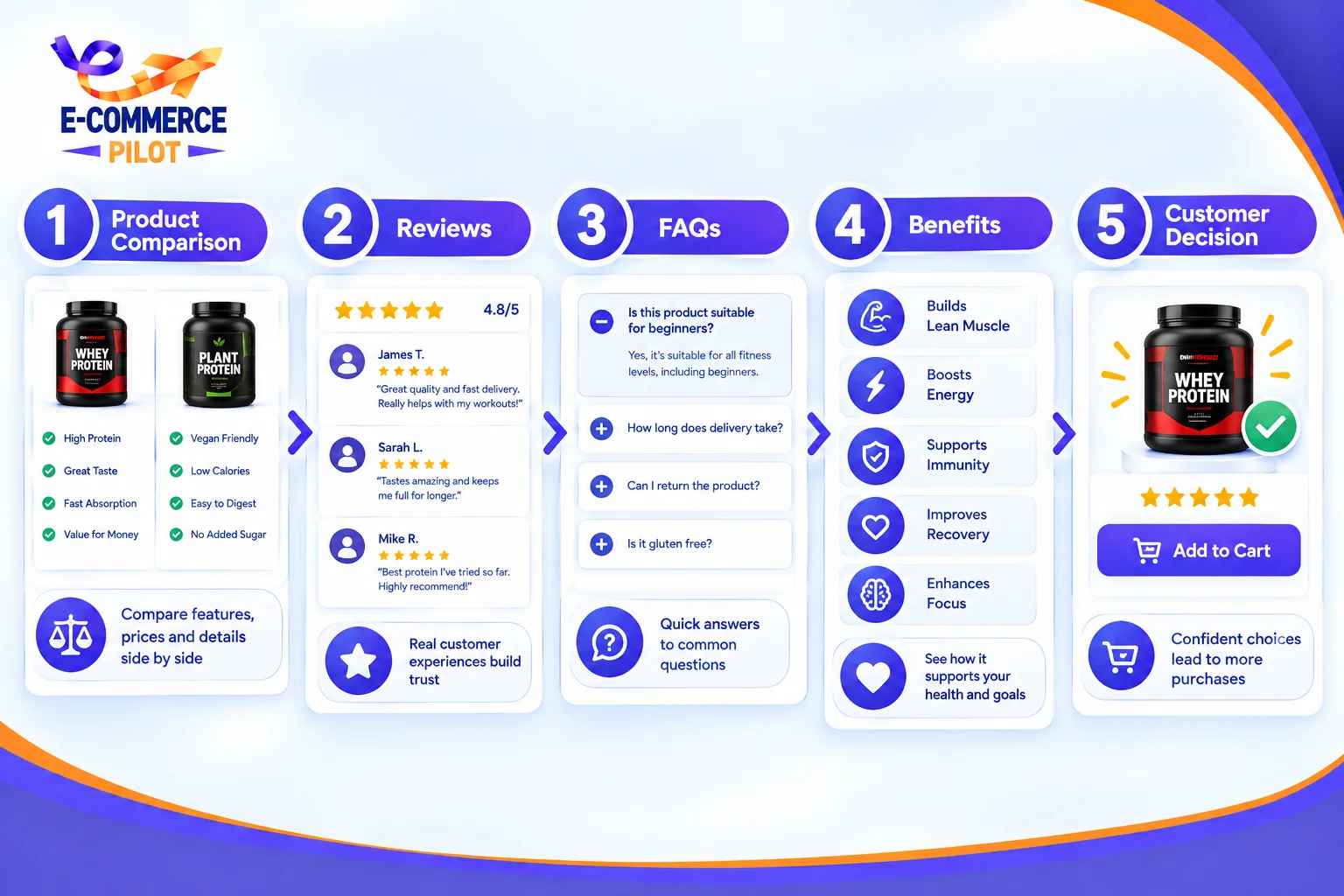
Therefore, your marketing funnel should provide clear information that helps customers evaluate their options. Product comparisons, reviews, FAQs, demonstrations, and detailed product descriptions can reduce uncertainty.
Content That Supports Consideration
Useful consideration content includes:
- Product comparison pages
- Customer reviews
- Product demonstrations
- FAQs
- Buying guides
- Testimonials
- Email follow-ups
These resources help shoppers understand why a product may fit their needs without forcing them to buy immediately.
Image suggestion: Product Comparison → Reviews → FAQs → Benefits → Customer Decision. Size: 3:2 HD
Conversion Stage: Turn Visitors Into Buyers
The conversion stage is where interest needs to become action. A strong marketing funnel makes purchasing simple by removing unnecessary steps and answering important questions before checkout.
Your product pages should clearly explain benefits, pricing, availability, shipping, returns, and payment options. In addition, strong calls to action can tell shoppers exactly what to do next.
Marketing Funnel Tactics for More Sales
Consider using:
- Clear product descriptions
- Strong calls to action
- Simple checkout forms
- Abandoned-cart emails
- Customer reviews
- Multiple payment options
- Remarketing campaigns
- Relevant product recommendations
Even small checkout problems can cause customers to leave. So, review the complete buying process regularly.
Retention Stage: Turn Buyers Into Repeat Customers
A purchase should not be the final step in your marketing funnel. After an order, businesses can continue building the relationship through useful communication and customer support.
For example, send order updates, product care tips, review requests, reorder reminders, and relevant product suggestions. As a result, customers have more reasons to return.
Retention Strategies That Keep Customers Engaged
Try these approaches:
- Post-purchase email sequences
- Loyalty rewards
- Reorder reminders
- Product recommendations
- Customer feedback requests
- Helpful support content
Retention can also provide valuable customer data. You can use that information to improve future campaigns and product offers.
How to Build an Ecommerce Marketing Funnel
Building a marketing funnel starts with understanding your customers. First, identify who they are, what problems they face, and what information they need before buying.
Next, define your goals for every stage. For example, awareness may focus on qualified traffic, while conversion may focus on completed orders.
Map Customer Intent
Identify the questions customers ask at different stages. Informational searches usually belong near awareness, while product and price searches often show stronger purchase intent.
Match Content to Each Stage
Create content based on customer intent. Blog posts can support awareness, comparison pages can support consideration, and optimized product pages can support conversion.
Track Funnel Performance
Use key metrics to understand how your marketing funnel performs, including:
- Organic traffic
- Engagement rate
- Conversion rate
- Cart abandonment rate
- Customer acquisition cost
- Repeat purchase rate
- Customer lifetime value
These numbers show where shoppers move forward and where they leave.
Common Marketing Funnel Mistakes to Avoid
Many ecommerce stores focus heavily on attracting traffic while giving less attention to what happens afterward. However, traffic alone does not guarantee sales.
Avoid sending every visitor to the same sales page. Also, do not ignore mobile usability, weak product information, complicated checkout steps, or missing follow-up emails.
A strong marketing funnel should connect every stage. Otherwise, customers may lose interest before reaching checkout.
Conclusion
An ecommerce marketing funnel gives online stores a clear way to guide shoppers from awareness to consideration, purchase, and retention. With the right content, product pages, email campaigns, and conversion tactics, each stage can support the next.
The key is to understand customer intent and provide useful information at the right moment. Then, track results and improve areas where shoppers drop off.
Ready to build a marketing funnel that turns more visitors into customers? Let Ecommerce Pilot help you plan, optimize, and grow your ecommerce store.