

What will you learn?
Local listings help people find your business when they search for nearby products or services. \However, simply creating a business profile is not enough. Your business information needs to stay accurate, complete, and consistent across important platforms.
The following steps explain how businesses can improve local listings and support stronger local search visibility. Each step focuses on practical actions you can apply without making the process complicated.
1. Keep Your Local Listings Information Consistent
Consistent business information gives customers and search engines clear details about your company. When your name, address, phone number, or website differs across platforms, it can create confusion. Therefore, start by checking every major listing where your business appears.
Your core business details should match across Google, Bing, Apple Maps, directories, social platforms, and industry websites. Also, use the same spelling, address format, and phone number whenever possible.
Check Your NAP Details
NAP means Name, Address, and Phone number. These details form the foundation of your local listings and should remain accurate.
- Use your official business name.
- Keep your complete address consistent.
- Use the same primary phone number.
- Add your correct website URL.
- Check opening hours regularly.
- Remove outdated contact information.
2. Optimize Your Google Business Profile
Your Google Business Profile plays an important role in local search. A complete profile gives potential customers useful information before they visit your website. Moreover, Google can use profile information to understand what your business offers and where it operates.
Add accurate business categories, services, descriptions, photos, hours, and contact details. However, avoid adding unnecessary keywords to your business name because this can create listing problems.
Improve Your Local Listings Profile
A strong profile should provide useful information instead of empty fields.
- Select the most relevant primary category.
- Add suitable secondary categories.
- List your main services.
- Upload clear and recent photos.
- Add accurate business hours.
- Keep holiday hours updated.
- Add a useful business description.
- Respond to customer questions when appropriate.
3. Build More Relevant Local Citations
Local citations are mentions of your business on websites, directories, and platforms. They can support local search by giving search engines more references to your business information. Still, quality matters more than simply creating hundreds of listings.
Focus on directories that relate to your location, industry, or audience. For example, a restaurant can use food and local business directories, while a law firm can focus on legal directories and professional organizations.
Choose Quality Local Listings
Not every directory deserves your attention. Prioritize platforms that are relevant and trustworthy.
- Find popular directories in your target location.
- Use industry-specific directories.
- Check existing citations before creating new ones.
- Correct inaccurate information.
- Remove duplicate business profiles where possible.
- Keep your NAP information consistent.
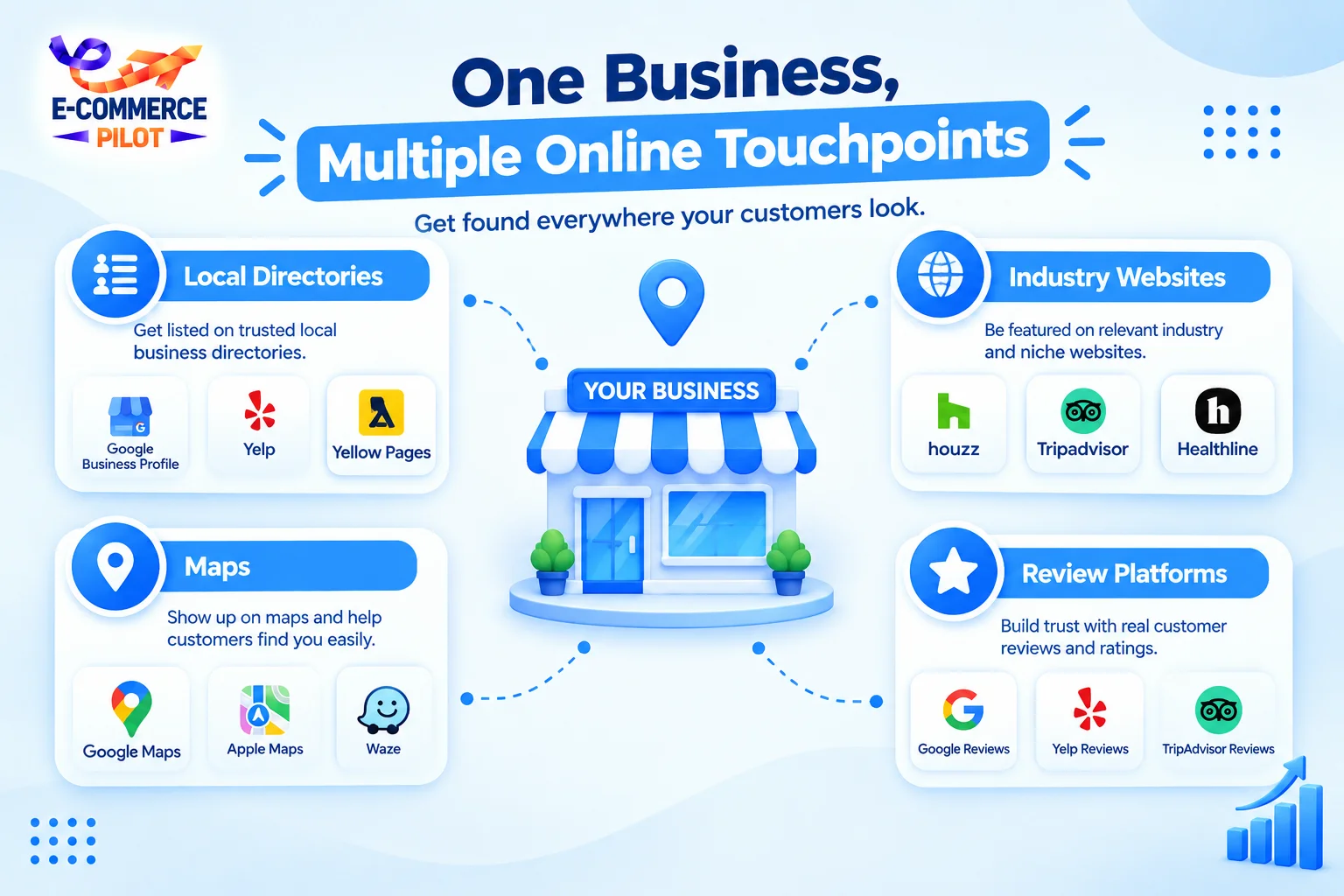
4. Get More Genuine Customer Reviews
Customer reviews can influence how people view your business before they contact you. They also provide fresh content about your products, services, and customer experience. Therefore, reviews should be part of your local SEO process.
Ask satisfied customers to leave honest feedback after a purchase or completed service. Make the process easy by providing a direct review link. Most importantly, never buy fake reviews or write reviews on behalf of customers.
Manage Reviews on Local Listings
Your review activity should include both positive and negative feedback. Responding professionally shows that your business pays attention to customer concerns.
- Ask customers for honest reviews.
- Make review requests easy to access.
- Respond to positive feedback.
- Address negative reviews professionally.
- Avoid arguing with customers publicly.
- Report reviews that violate platform rules.
5. Monitor and Update Local Listings Regularly
Local SEO is not a one-time task. Business hours change, services are added, addresses can move, and phone numbers may be updated. As a result, outdated information can remain online if you do not check your listings regularly.
Create a simple monitoring routine to review your most important platforms. You can also track rankings, calls, website visits, direction requests, and customer actions to understand how your local presence is performing.
Track Your Local Listings Performance
Regular monitoring helps you find problems before they affect customers.
- Check your main listings every month.
- Look for duplicate profiles.
- Update seasonal business hours.
- Review customer feedback.
- Track calls and direction requests.
- Monitor local keyword rankings.
- Check website traffic from local searches.
Why Local Listings Matter for Local SEO
Local listings can help businesses appear when nearby customers search for relevant products and services. They also make important business information easier to access across search engines, maps, and directories.
However, listings work best when they support a wider local SEO strategy. Your website, Google Business Profile, reviews, citations, content, and technical SEO should all provide consistent signals about your business.
Common Local Listings Mistakes to Avoid
Many businesses lose local search opportunities because their listings contain outdated or incomplete information. Fortunately, most problems are easy to identify once you know what to check.
Avoid these common mistakes:
- Using different business names across platforms
- Leaving old phone numbers online
- Forgetting to update business hours
- Creating duplicate profiles
- Choosing unrelated categories
- Using fake customer reviews
- Ignoring customer questions and reviews
- Creating listings on low-quality websites
A regular audit can help keep your local listings accurate and useful.
Conclusion
Local listings give customers important information when they search for businesses nearby. By keeping business details consistent, improving your Google Business Profile, building relevant citations, collecting genuine reviews, and monitoring your profiles, you can create a stronger local SEO foundation.
The key is consistency. Rather than creating listings once and forgetting them, review your local presence regularly and fix inaccurate information quickly. When your local listings remain accurate and complete, customers can find the right information when they need it.
Ready to improve your local visibility? Let Ecommerce Pilot manage your local SEO and local listings so you can focus on growing your business.