
What will you learn?
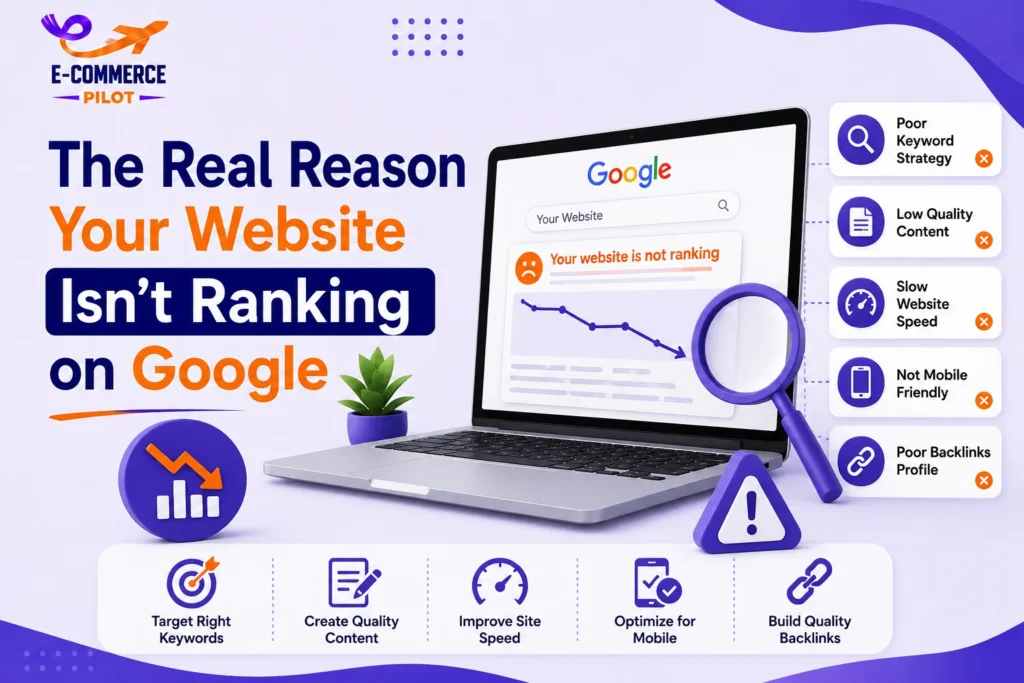
Why Your Website Isn’t Ranking on Google
Many website owners expect SEO results within a few weeks. However, Google looks at hundreds of ranking signals before deciding where a page belongs. Therefore, even a well-designed website may struggle if important SEO factors are missing. Understanding these reasons helps you fix problems instead of guessing.
Your Website Is Too New
New websites usually have limited authority. As a result, Google needs time to understand your content and trust your website. Publishing helpful content regularly and earning quality backlinks can improve this process over time.
Your Competitors Have Stronger SEO
Many businesses compete for the same keywords. Therefore, websites with better content, stronger backlinks, and higher authority often rank first. Studying competitors helps identify opportunities for improvement.
Common SEO Mistakes That Stop Rankings
Even small SEO mistakes can reduce your visibility in search results. Therefore, reviewing your website regularly helps identify issues before they affect traffic. Fixing these mistakes improves both search performance and user experience.
Targeting the Wrong Keywords
Choosing keywords with high competition or low search intent makes ranking difficult. Instead, focus on keywords your audience actually searches for and match them with useful content.
Missing Title Tags and Meta Descriptions
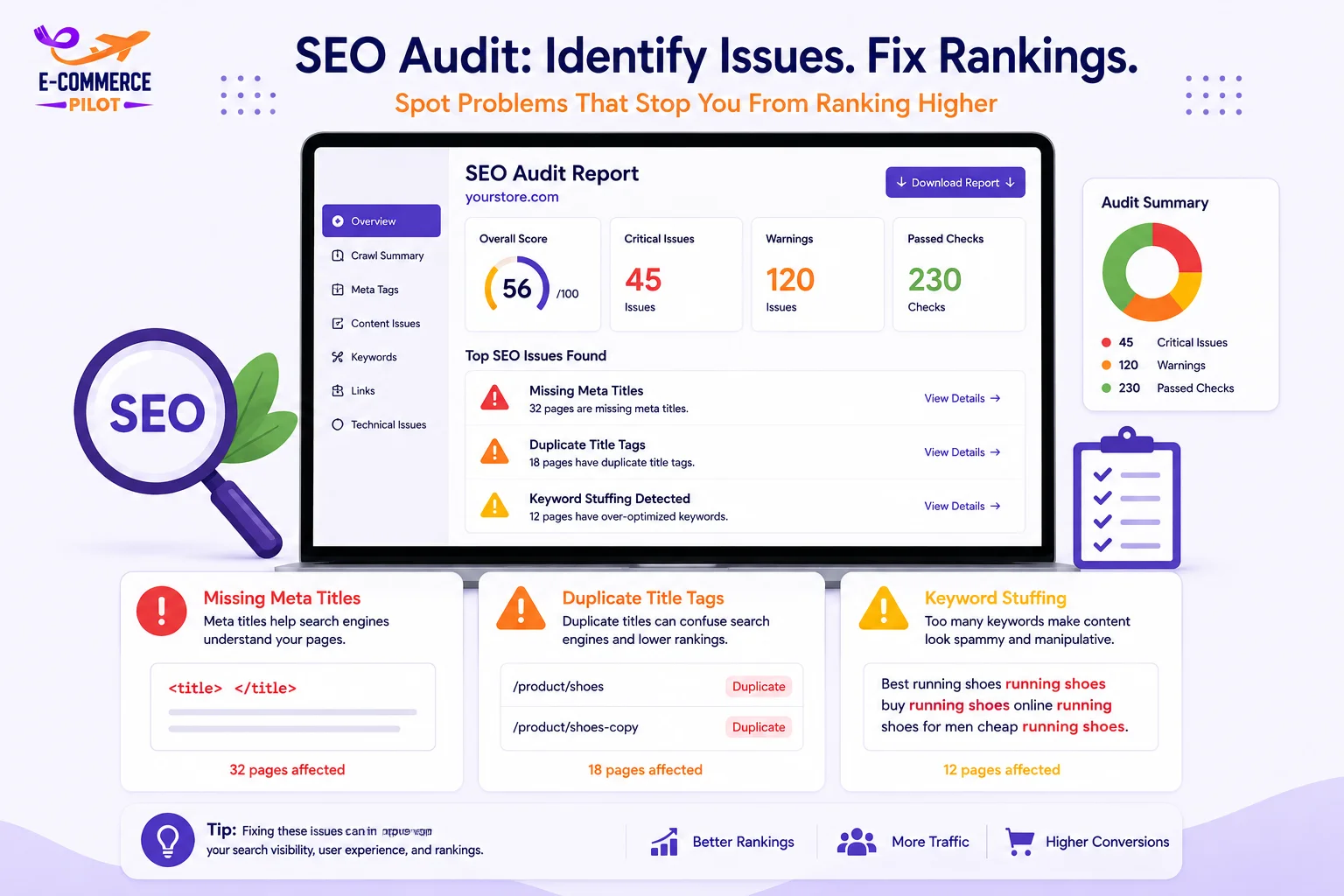
Search engines use page titles and descriptions to understand your content. Missing or duplicated metadata makes it harder for Google to rank your pages correctly.
Keyword Stuffing
Using the same keyword repeatedly reduces readability. Instead, include related terms naturally throughout your content.
Technical Issues That Hurt SEO
Technical SEO creates the foundation for search visibility. If Google cannot crawl or index your website properly, even excellent content may never rank. Therefore, regular technical audits are important.
Slow Website Speed
Slow pages increase bounce rates and reduce user satisfaction. Compressing images and improving server performance helps pages load faster.
Mobile-Friendly Problems
Most users browse using smartphones. Therefore, websites that work well on mobile devices usually perform better in Google Search.
Crawl and Index Errors
Broken pages, blocked URLs, and sitemap problems prevent Google from indexing important content.
Low-Quality Content and Keyword Problems
Content remains one of Google’s strongest ranking signals. However, simply writing articles is not enough. Every page should answer user questions clearly and provide useful information.
Thin Content
Short pages with little value rarely perform well. Adding practical examples and useful information improves content quality.
Duplicate Content
Copied or repeated content confuses search engines. Therefore, every page should provide original information.
Search Intent Doesn’t Match
Google rewards pages that answer what users actually want. Understanding search intent improves rankings and engagement.
Weak Backlink Profile
Backlinks remain an important ranking factor because they show that other websites trust your content. However, quality matters much more than quantity. Building natural links from trusted websites strengthens SEO over time.
Low-Quality Links
Spammy backlinks can reduce your website’s credibility. Focus on earning links from relevant and trusted websites.
No Link Building Strategy
Publishing content alone rarely attracts enough backlinks. Guest posting, digital PR, and valuable resources encourage websites to link naturally.
Poor User Experience Signals
Google measures how visitors interact with your website. If users leave quickly or struggle to navigate, rankings may decrease. Therefore, improving usability supports long-term SEO success.
High Bounce Rate
Visitors often leave when content doesn’t meet expectations. Better page structure and relevant information help keep users engaged.
Difficult Navigation
Simple menus and internal links help visitors and search engines understand your website. Clear navigation allows users to find information quickly without frustration. In addition, a well-organized website encourages visitors to explore more pages and spend more time on your site. This improves user experience and supports better search rankings.
How Google Measures Trust and Authority
Google wants to recommend websites people can trust. Therefore, websites that provide accurate information and clear business details often perform better over time.

Steps to Improve Your Google Rankings
Improving rankings requires consistent work rather than quick fixes. Following proven SEO practices produces better long-term results. Small improvements across multiple areas often create significant growth.
- Perform Regular SEO Audits
- Update Existing Content
- Build High-Quality Backlinks
- Track SEO Performance
Common SEO Myths to Ignore
Many SEO myths waste time and create unrealistic expectations. Following Google’s best practices produces better results than shortcuts.
- SEO Gives Instant Results
- More Keywords Mean Better Rankings
- Backlinks Alone Guarantee Rankings
Conclusion
Website Isn’t Ranking because SEO involves much more than adding a few keywords. A successful SEO strategy combines technical optimization, valuable content, trusted backlinks, and a positive user experience. By fixing these areas consistently, your website has a much better chance of earning higher rankings, attracting qualified visitors, and achieving long-term growth in Google Search.
Ready to rank higher on Google? Let our SEO experts audit your website and build a strategy that brings more traffic, leads, and sales. Contact us today.