
What will you learn?
Why E-E-A-T Matters for Ecommerce Websites
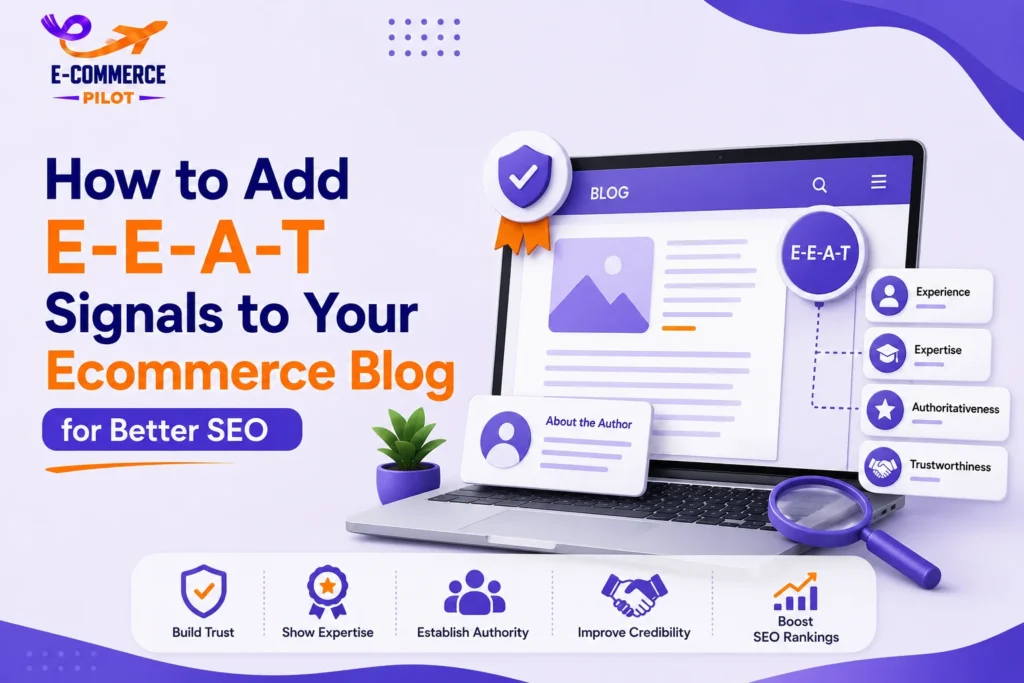
E-E-A-T stands for Experience, Expertise, Authoritativeness, and Trustworthiness. These four elements help Google understand whether your content is reliable and helpful for users. Although E-E-A-T is not a direct ranking factor, it strongly influences how search engines evaluate content quality. Therefore, adding these signals to your ecommerce blog can improve user confidence and support better search visibility over time.
Blogs often help customers research products before making a purchase. If your articles provide clear answers, practical examples, and accurate information, visitors are more likely to trust your brand. As a result, they spend more time on your website and are more willing to explore your products or services.
What Does E-E-A-T Mean?
Each part of E-E-A-T plays an important role in content quality. Experience means sharing real-world knowledge gained through practical work or product use. Expertise shows that the writer understands the topic and provides accurate information. Authoritativeness comes from industry recognition, quality backlinks, and a strong online presence. Finally, Trustworthiness focuses on honesty, transparency, website security, and reliable business information.
For example, an ecommerce business that shares product testing, customer success stories, and detailed buying guides demonstrates stronger E-E-A-T than a website that publishes generic articles without evidence or practical examples.
Why Google Uses E-E-A-T
Show Real Experience in Every Blog Post
Experience is one of the strongest E-E-A-T signals because it shows readers that your advice comes from real work instead of assumptions. People trust content that includes practical examples, honest opinions, and lessons learned from actual ecommerce projects. Therefore, every blog should include information that reflects your team’s knowledge and daily work. This approach also makes your content different from articles that simply repeat information from other websites.
Share Real Case Studies
Case studies give readers proof that your strategies work in real situations. Instead of making broad claims, explain the challenge, the solution, and the results you achieved. For example, you can describe how improving product descriptions increased organic traffic or how technical SEO fixed indexing problems. As a result, readers gain confidence in your advice and your business.
Add First-Hand Experience
Your team works with ecommerce websites every day, so use that experience in your articles. Explain what worked, what did not, and what you learned from different projects. Readers appreciate honest advice because it feels practical and reliable. Moreover, unique insights make your content more valuable than generic blog posts.
Use Original Images and Screenshots
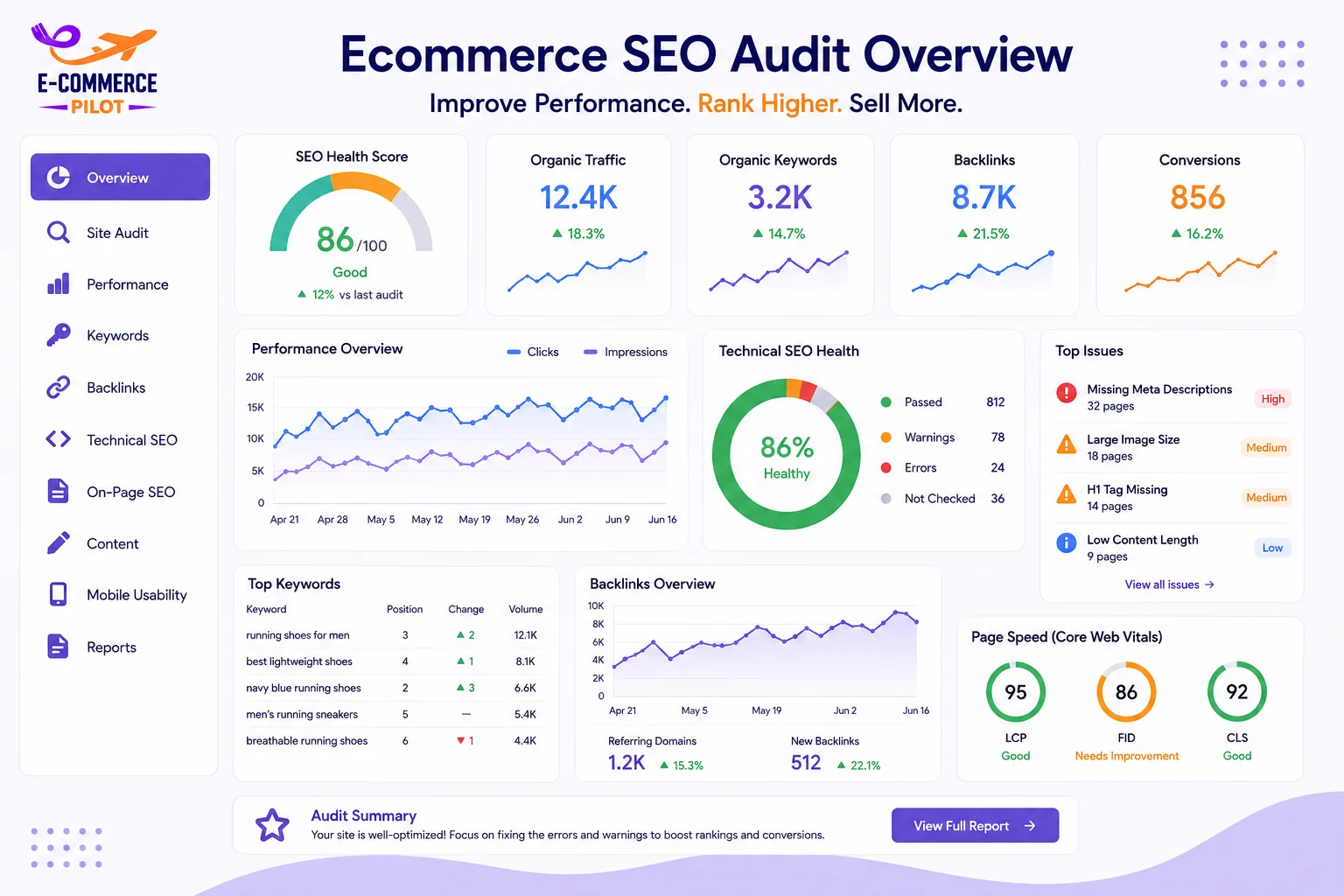
Original visuals strengthen your content because they show real examples instead of stock photos. Add screenshots from Google Search Console, Google Analytics, Shopify, WooCommerce, or website audits whenever possible. These images help readers understand the topic more easily while increasing the credibility of your article.
Increase Authority Through Credible Sources
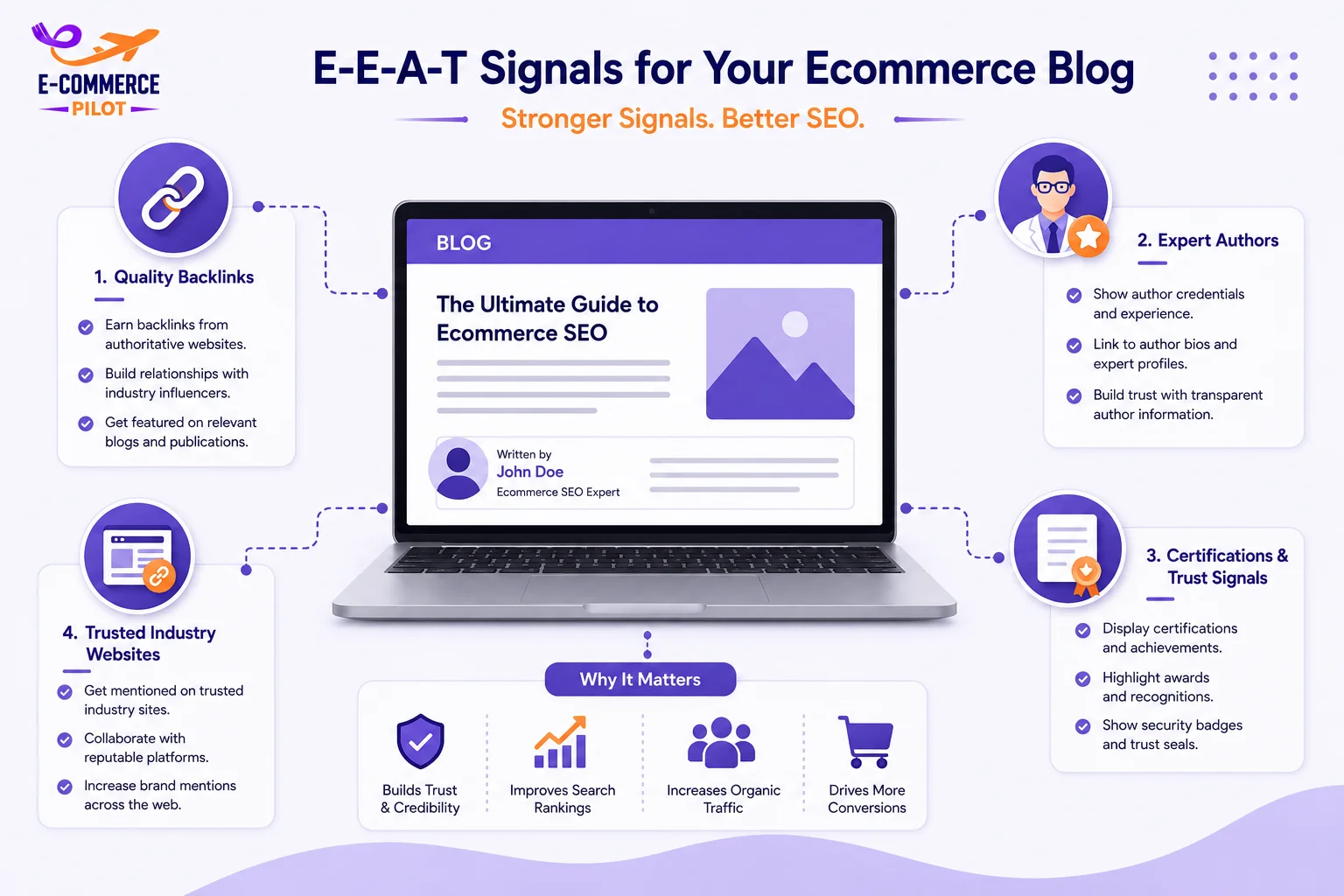
Authority grows when trusted websites and industry recognition support your content. Search engines pay attention to signals that show your business has earned respect within its industry. Therefore, building authority should be part of every ecommerce content strategy. Over time, these efforts help improve your website’s reputation and increase organic visibility.
Link to Trusted Sources
Support important facts with links to official documentation, research reports, or well-known industry resources. Reliable references improve the accuracy of your content and show readers that your information is based on credible sources. However, use external links only when they add value to the discussion.
Earn Quality Backlinks
Backlinks remain an important authority signal because they show that other websites trust your content. Publish useful guides, original research, and informative guest posts to attract natural links. Although building backlinks takes time, quality links provide lasting SEO benefits and improve your site’s reputation.
Improve Trust Across Your Website
Trust is the foundation of every successful ecommerce website. Even if your blog contains useful information, visitors may leave if they cannot verify your business or feel confident about your website. Therefore, every page should include clear business details, secure browsing, and transparent policies. These signals help both users and search engines view your website as reliable and professional.
Display Contact Information
Make it easy for visitors to contact your business. Add a dedicated contact page, business email, phone number, and social media profiles. Clear contact details show that your business is real and available to help customers. Consequently, these details improve trust and support a better user experience.
Use Customer Reviews and Testimonials
Customer reviews provide social proof because they show real experiences from previous buyers. Positive testimonials help new visitors feel more confident before making a purchase. In addition, genuine reviews strengthen your brand reputation and support long-term customer trust.
Common E-E-A-T Mistakes to Avoid
Many ecommerce blogs lose credibility because they focus only on keywords instead of creating helpful content. While SEO remains important, readers expect useful information that answers their questions accurately. Avoiding common mistakes helps your website maintain trust and improve long-term rankings.
Publishing Thin Content
Short articles with little useful information rarely satisfy readers. Instead, explain topics clearly and provide practical advice that visitors can apply. Well-written content keeps users engaged and increases the chances of earning backlinks.
Missing Author Information
Publishing articles without author details makes it difficult for readers to judge credibility. Every blog should clearly identify the writer and explain their relevant knowledge. This simple step supports stronger E-E-A-T signals.
Ignoring Content Updates
Old statistics, outdated screenshots, and broken links reduce trust. Review your articles regularly to keep information accurate and relevant. Fresh content also shows search engines that your website remains active.
Making Unsupported Claims
Avoid promises that cannot be verified. Instead, support your recommendations with examples, case studies, or trusted sources. Honest content builds stronger relationships with readers and improves your brand reputation.
Conclusion
Building an E-E-A-T Ecommerce Blog is one of the most effective ways to improve SEO while earning customer trust. Share real experience, publish accurate information, strengthen your authority, and maintain transparency across your website. These practices help readers find reliable answers and encourage search engines to recognize the quality of your content. As you continue updating your blog and focusing on user needs, your ecommerce website will be in a stronger position to achieve long-term organic growth.
Need SEO content that builds trust and ranks on Google? Ecommerce Pilot creates high-quality ecommerce blogs designed to increase traffic, strengthen your brand, and turn visitors into customers. Contact us today to grow your business.