

What will you learn?
Why Technical SEO Matters for Online Shops
Technical SEO creates the foundation of every successful ecommerce website. It allows search engines to crawl, understand, and index your pages correctly. As a result, your products become easier to find in search results.
Moreover, customers enjoy a faster and smoother shopping experience. Therefore, better technical SEO can improve both rankings and conversions over time.
Better Crawling
Search engine bots need clear navigation and working links to access your pages. Broken links, blocked pages, and poor navigation make crawling difficult. Consequently, some products may never appear in search results.
Better User Experience
A technically optimized website loads quickly, works well on every device, and keeps visitors engaged. Because customers can browse products easily, they are more likely to complete a purchase.
Technical SEO for Online Shops
Website speed is one of Google’s most important ranking factors. Customers expect pages to load within a few seconds. If your store is slow, many visitors will leave before viewing your products.
In addition, fast websites increase customer satisfaction and improve conversion rates. Therefore, speed optimization should always be part of your SEO strategy.
Optimize Images
Compress product images without reducing quality. Also, use WebP images and lazy loading to reduce loading time while maintaining a professional appearance.
Reduce CSS and JavaScript
Remove unnecessary CSS and JavaScript files. Furthermore, enable browser caching and GZIP compression to improve loading performance across all devices.
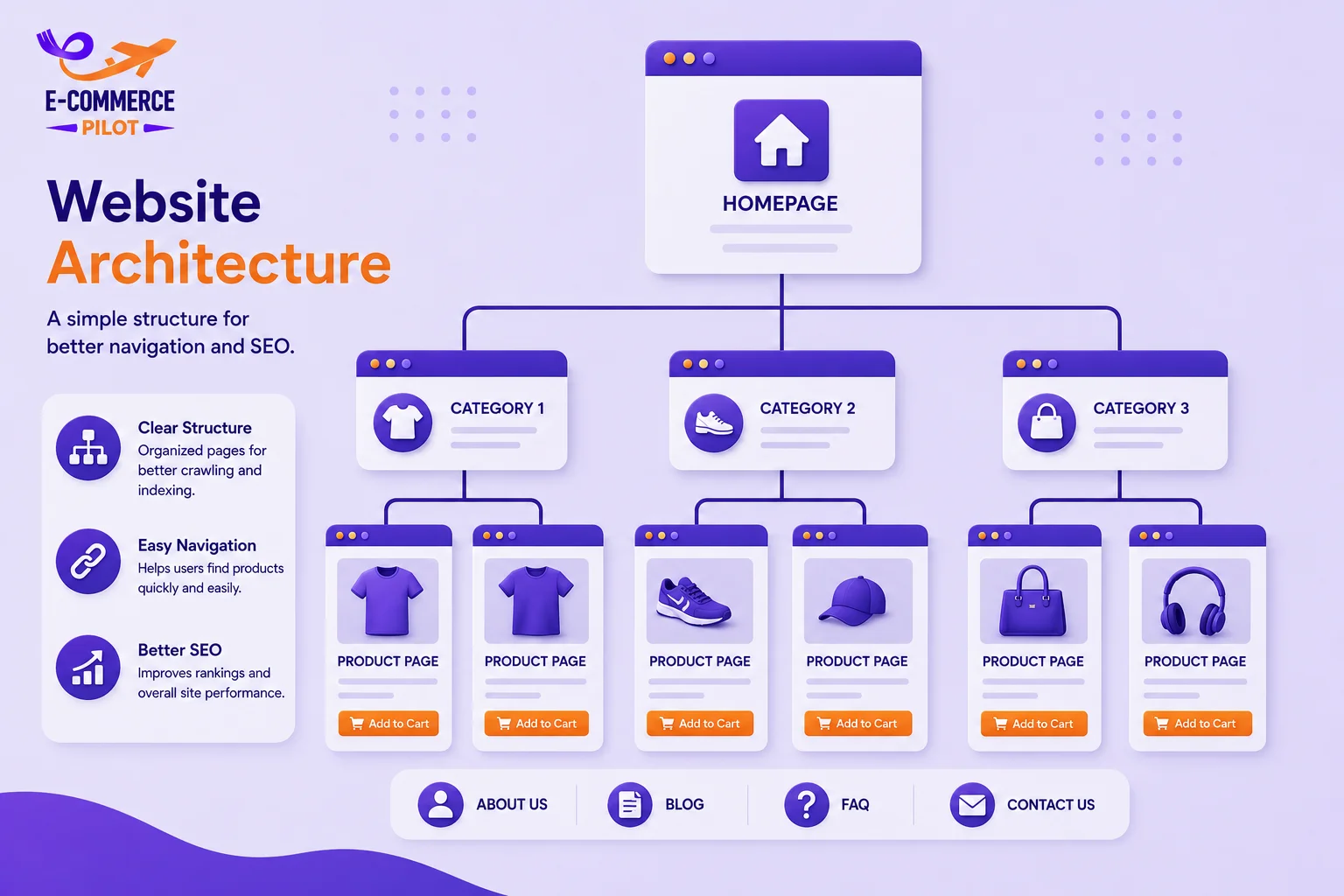
Build a Clear Website Structure
A simple website structure helps both visitors and search engines understand your online shop. Categories and products should follow a logical order so users can find what they need quickly.
Likewise, search engines can crawl important pages more efficiently when your navigation is organized properly.
Keep Navigation Simple
Use clear categories and avoid creating too many subcategories. Ideally, customers should reach any product within three clicks from the homepage.
Create SEO-Friendly URLs
Keep URLs short and readable. Include relevant keywords while avoiding unnecessary numbers or symbols that make URLs difficult to understand.
Optimize for Mobile Users
Most online purchases now happen on smartphones. Therefore, every ecommerce website must provide an excellent mobile experience.
Since Google uses mobile-first indexing, poor mobile performance can directly affect search rankings.
Responsive Design
Your website should automatically adjust to different screen sizes. Every page should remain easy to read and use without zooming.
Easy Mobile Navigation
Menus, buttons, and filters should work smoothly on mobile devices. In addition, the checkout process should remain simple and fast.
Improve Crawling and Indexing
Search engines must crawl the right pages while ignoring pages that have little SEO value. Proper crawl management improves indexing and helps search engines focus on your important content.
Regular monitoring also prevents technical problems from affecting rankings.
Submit an XML Sitemap
An updated XML sitemap helps Google discover new products and recently updated pages more quickly.
Configure Robots.txt Correctly
Use robots.txt carefully to block unnecessary pages while allowing search engines to access valuable product and category pages.
Fix Duplicate Content
Duplicate content is common on ecommerce websites because products often appear in different categories. However, duplicate pages may confuse search engines.
Fortunately, a few technical improvements can solve this problem.
Use Canonical Tags
Canonical tags tell search engines which version of a page should receive ranking signals. As a result, duplicate content issues become easier to manage.
Write Unique Product Descriptions
Avoid copying manufacturer descriptions. Instead, create original product content that provides useful information for customers.
Use Structured Data
Structured data helps search engines understand your products and display more useful information in search results. Rich snippets often improve click-through rates because shoppers see prices, ratings, and availability before visiting your website.
Product Schema
Add product schema for pricing, stock status, reviews, and ratings. This helps search engines display detailed product information.
Breadcrumb Schema
Breadcrumb schema improves navigation while helping search engines understand your website structure.
Secure Your Online Shop
Website security is essential for ecommerce businesses because customers share personal and payment information during checkout.
HTTPS also builds customer trust and supports better search visibility.
Monitor Technical SEO Performance
Technical SEO is not a one-time task. Your website changes as products, pages, and plugins are updated. Therefore, regular audits help maintain strong performance.
Continuous monitoring also allows you to identify problems before they affect rankings.
Check Technical Errors
Review broken links, crawl errors, redirects, and indexing reports regularly to keep your website healthy.
Track Website Performance
Monitor Core Web Vitals, page speed, structured data, and mobile usability using SEO tools to measure ongoing improvements.
Conclusion
Technical SEO for Online Shops remains one of the most important parts of ecommerce SEO in 2026. A fast website, clear structure, proper indexing, secure browsing, structured data, and regular technical audits help search engines understand your store while improving customer experience. By following these best practices consistently, your online shop can achieve stronger rankings, attract more qualified visitors, and increase online sales.
Want better rankings and more ecommerce sales? Let our SEO experts optimize your online shop with professional technical SEO services today.