
What will you learn?
How Long Does SEO Take to Show Results?
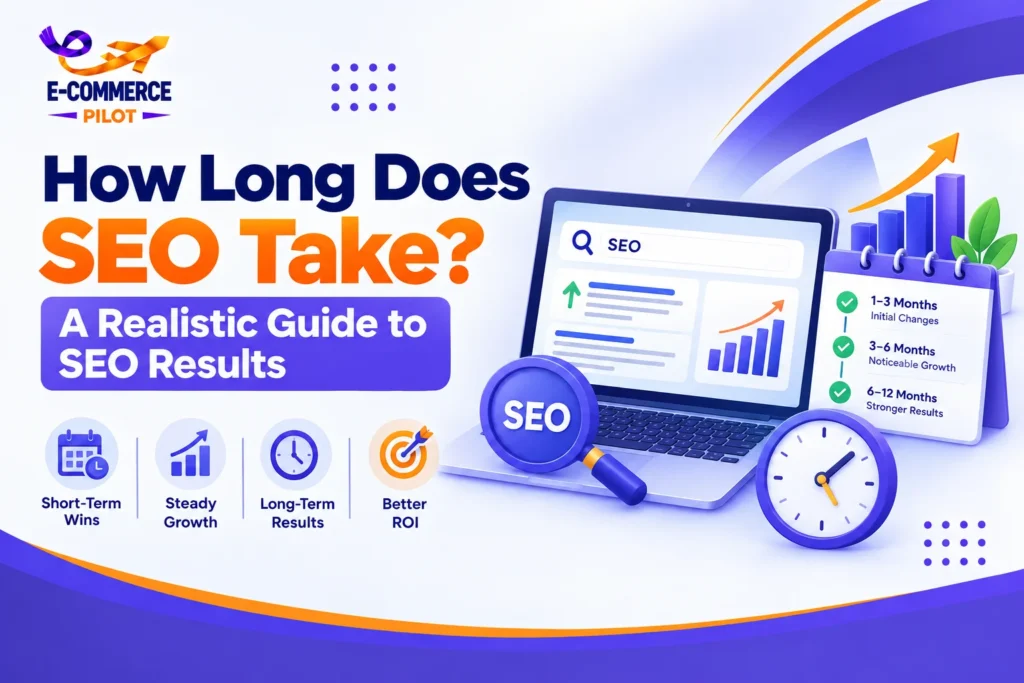
For many websites, meaningful SEO results can take around 3 to 6 months, although the timeline varies widely. A new website in a competitive market may need longer, while an established site with strong authority can see improvements sooner.
The first signs may not always appear as higher rankings. Instead, you might notice more pages indexed, better keyword positions, increased impressions, or growth in organic clicks.
Early SEO Results
During the first few weeks, search engines need time to crawl and process your changes. Therefore, early SEO results often involve technical improvements rather than large traffic increases.
You may notice:
- More pages being indexed
- Improved technical SEO signals
- Better keyword impressions
- Small ranking movements
- Increased Google Search Console activity
SEO Results After Three to Six Months
After several months of consistent work, stronger ranking improvements may become easier to see. However, results depend heavily on competition and the quality of your SEO work.
At this stage, businesses may experience:
- Higher rankings for target keywords
- More organic website visits
- Growth in qualified leads
- Better visibility for service pages
- Increased performance from optimized content

SEO Timeline: What Happens Month by Month
A practical SEO timeline helps you set realistic expectations. Although every project differs, most campaigns follow a similar pattern. First, you fix technical problems and create a strong foundation. Then, you build content and authority while tracking ranking changes.
Month 1: SEO Audit and Technical Fixes
The first month usually focuses on finding problems that may prevent search engines from understanding or crawling your website. As a result, technical SEO becomes the starting point for many campaigns.
Typical tasks include:
- Website SEO audit
- Keyword research
- Indexing checks
- Page speed improvements
- Internal linking
- Metadata updates
- Technical error fixes
Months 2–3: Content and On-Page SEO
Next, the focus shifts toward useful content and page optimization. Each important page should target a clear search intent while supporting the overall website structure.
During this stage, teams often improve:
- Service pages
- Blog content
- H1 and H2 headings
- Meta titles and descriptions
- Internal links
- Image optimization
- Keyword targeting
Months 4–6: Authority and Organic Growth
As your website gains more useful content and authority, stronger ranking opportunities may appear. However, competitive keywords can still require additional time and consistent effort.
At this point, your SEO timeline may include:
- Link building
- Content updates
- New keyword targeting
- Conversion improvements
- Competitor analysis
- Performance tracking
Factors That Affect Your SEO Timeline
No two websites have exactly the same SEO timeline. Several factors can speed up or slow down progress. Therefore, you should evaluate these areas before setting a deadline for ranking goals.
Website Age and Authority
Established websites often have an advantage because search engines already have data about their content and performance. New websites usually need more time to build authority and trust.
However, age alone does not guarantee rankings. A newer website with useful content and strong technical SEO can still compete successfully for suitable keywords.
Competition and Keyword Difficulty
Your SEO timeline also depends on who you are competing against. Ranking for a local, low-competition phrase can be easier than ranking for a broad commercial keyword.
For example, a small business may rank sooner for a specific service in one city than for a national keyword with thousands of competing pages.
Content Quality
Useful content gives search engines a stronger reason to rank your pages. Therefore, focus on answering real questions, matching search intent, covering important topics, and keeping information accurate.
Poor content can extend your SEO timeline because rankings may remain weak even when other SEO tasks are completed.
Why Some Websites Rank Faster
Some websites achieve SEO results sooner because they already have strong technical foundations, useful content, relevant backlinks, and established authority. In addition, they may target realistic keywords instead of competing immediately for extremely difficult terms.
A focused SEO strategy can shorten the path to measurable progress. Rather than targeting every keyword at once, start with terms that match your audience, services, and current authority.
Signs Your SEO Is Working
Ranking position is only one part of the SEO timeline. You should also monitor several supporting signals to understand whether your campaign is moving in the right direction.
Watch for:
- Organic impressions increasing
- More keywords entering search results
- Higher click-through rates
- More organic traffic
- More leads from search
- Better engagement on landing pages
Common SEO Mistakes That Delay Results
SEO can take longer when businesses make changes without a clear strategy. For example, constantly changing target keywords can prevent pages from building consistent relevance.
Other common problems include:
- Publishing thin content
- Ignoring technical SEO
- Building poor-quality links
- Targeting highly competitive keywords too early
- Stopping SEO after a few weeks
- Ignoring search intent
- Failing to track conversions
Consistency matters because SEO is an ongoing process rather than a one-time task.
How to Build a Better SEO Strategy
A strong SEO timeline starts with realistic goals and regular measurement. First, identify your current position. Next, choose keywords based on relevance, competition, and business value.
Then, improve technical SEO, optimize important pages, publish useful content, build relevant authority, and review performance regularly. Most importantly, connect SEO metrics with business results instead of focusing only on rankings.
Set Realistic SEO Goals
Instead of asking only, “How long does SEO take?” ask what you want SEO to achieve. Your goals might include more qualified traffic, service-page rankings, online sales, leads, or stronger visibility for specific searches.
This approach makes your SEO timeline easier to measure and helps you decide which activities deserve the most attention.
Conclusion
The honest truth is that SEO results vary by website, but many businesses can see meaningful progress within 3 to 6 months with consistent work. Your SEO timeline depends on competition, content, website authority, and strategy. If you are wondering how long SEO takes, focus on steady growth in rankings, traffic, leads, and conversions rather than overnight results.
Ready to improve your SEO timeline? Let Ecommerce Pilot build a focused SEO strategy that turns search visibility into qualified traffic and business growth.