
What will you learn?
What Is an Ecommerce Marketing Funnel?
An Ecommerce Marketing Funnel is the path a shopper follows before, during, and after buying from an online store. It helps businesses understand customer behavior at each stage. Rather than treating every visitor the same, marketers create content and campaigns based on where shoppers are in their buying journey.
A clear funnel can also show where potential customers leave before completing a purchase. Therefore, businesses can use funnel data to improve their website, product pages, offers, emails, and advertising campaigns.
Why the Marketing Funnel Matters for Ecommerce
The funnel gives ecommerce businesses a simple way to organize their marketing efforts. For example, a new visitor may need useful information before they feel ready to buy, while an existing customer may respond better to a special offer.
Key benefits include:
- Better understanding of customer behavior
- More relevant marketing messages
- Higher conversion opportunities
- Better use of advertising budgets
- Stronger customer retention
Stages of an Ecommerce Marketing Funnel
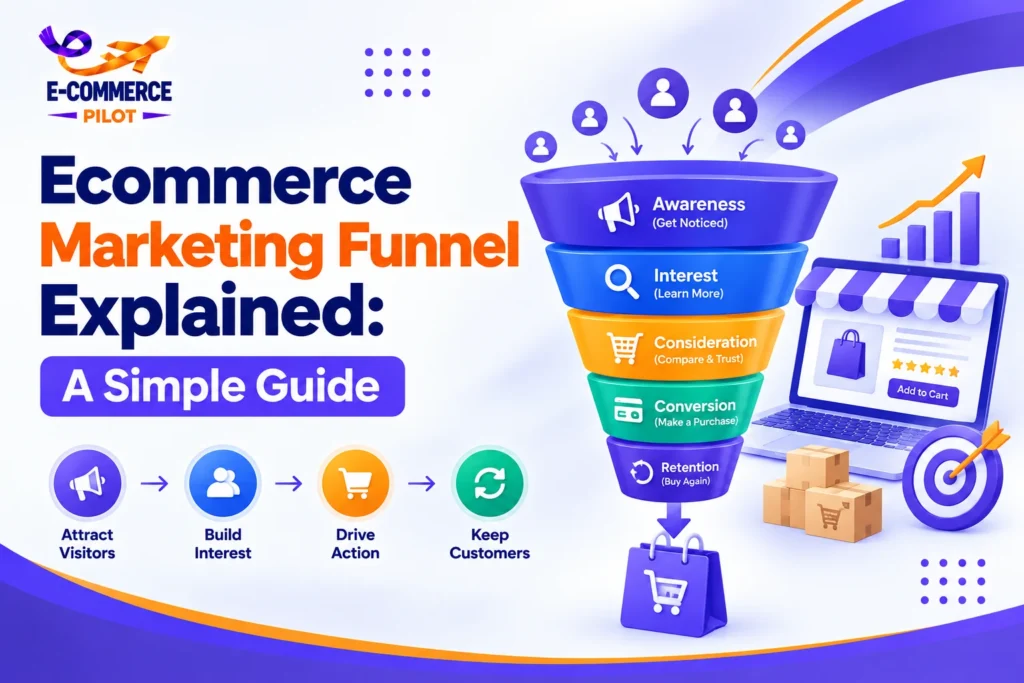
An ecommerce funnel normally moves shoppers through awareness, consideration, conversion, and retention. Each stage requires a different marketing approach because customer intent changes as they move closer to a purchase.
For example, someone searching for product information may not be ready to buy yet. However, someone who has added a product to their cart may only need a clear reason to complete the order.
Awareness: Attract Potential Customers
The awareness stage is where shoppers first learn about your ecommerce brand. Your goal is to reach people who may have a problem, need, or interest related to your products.
You can attract these visitors through:
- SEO and Google search
- Social media content
- Paid advertising
- Blog content
- Influencer marketing
- Product-focused videos
 .
Consideration: Build Interest and Trust
At this stage, visitors are comparing products, prices, features, and brands. They may visit product pages, read reviews, compare alternatives, or sign up for an email list.
Your website should answer their questions clearly. Product descriptions, reviews, FAQs, comparison content, product images, and useful guides can help shoppers feel more confident about moving forward.
Conversion: Turn Visitors Into Buyers
The conversion stage focuses on completing the purchase. At this point, shoppers already show strong buying intent, so unnecessary friction can cause them to leave.
Focus on:
- Clear product information
- Strong calls to action
- Simple checkout
- Multiple payment options
- Transparent shipping costs
- Trust signals and reviews
- Mobile-friendly design
Retention: Bring Customers Back
The funnel does not end after the first order. Retention focuses on encouraging existing customers to purchase again and remain connected with the brand.
Email campaigns, loyalty programs, personalized product recommendations, post-purchase support, and special offers can help maintain customer relationships.
How to Build an Ecommerce Marketing Funnel
Building a funnel starts with understanding your customers and mapping their buying journey. Instead of creating random campaigns, connect each marketing activity to a specific stage and customer action.
First, identify your target audience and their needs. Then, create suitable content and offers for each stage. Finally, track results and improve the areas where shoppers commonly leave.
Create Content for Every Funnel Stage
Different shoppers need different types of content. Therefore, your content strategy should support the entire customer journey rather than focus only on sales.
Consider using:
- Blog posts for awareness
- Buying guides for consideration
- Product pages for conversion
- Email campaigns for retention
- Reviews and testimonials for trust
Optimize Your Ecommerce Website
Your website plays a central role throughout the funnel. Even strong traffic may produce poor results if visitors struggle to navigate the store or complete checkout.
Improve important areas such as:
- Page speed
- Navigation
- Product filtering
- Mobile usability
- Product descriptions
- Checkout experience
- Calls to action
How to Measure Ecommerce Funnel Performance
Tracking funnel performance helps you understand what works and where customers drop off. You should measure each stage instead of focusing only on total sales.
Important metrics include:
- Website traffic
- Click-through rate
- Product page views
- Add-to-cart rate
- Checkout completion rate
- Conversion rate
- Average order value
- Customer retention rate
For example, high traffic with a low add-to-cart rate may indicate a problem with product pages, pricing, trust, or customer intent.
Common Ecommerce Marketing Funnel Mistakes
Many online stores focus heavily on attracting visitors but pay less attention to what happens afterward. As a result, they may spend more on traffic without seeing similar growth in sales.
Common mistakes include:
- Targeting the wrong audience
- Using the same message at every stage
- Ignoring mobile users
- Making checkout too complicated
- Failing to follow up with visitors
- Not tracking funnel performance
- Focusing only on first-time purchases
Fixing these issues can create a smoother journey from first visit to repeat purchase.
Conclusion
An Ecommerce Marketing Funnel helps online stores understand how shoppers move from awareness to consideration, purchase, and retention. By creating the right content, improving website usability, reducing checkout friction, and tracking key metrics, businesses can build a clearer path toward sales.
The goal is not simply to bring more people to your store. Instead, you should guide the right visitors toward useful information, a confident purchase, and a reason to return.
aReady to turn more visitors into customers? Let Ecommerce Pilot build a conversion-focused ecommerce strategy for your store.