
What will you learn?
Google Ads and Meta Ads give businesses two different ways to reach potential customers online. Google Ads can connect with people who are already searching for a product or service, while Meta Ads can introduce offers to users based on interests, behavior, and demographics. Therefore, using both platforms can create a wider paid marketing strategy.
However, running campaigns on both platforms without a clear plan can waste budget. Businesses need the right audience, campaign goals, creative assets, landing pages, and tracking. When these elements work together, paid advertising can bring qualified traffic, leads, and sales.
How Google Ads + Meta Ads Work Together
Google Ads and Meta Ads support different stages of the customer journey. Google often captures existing demand, while Meta can help create awareness and interest before a customer actively searches.
For example, someone may see a product on Facebook or Instagram and later search for that product on Google. Similarly, a visitor who comes through Google can later see a reminder ad on Meta.
Google Ads Captures Search Demand
Google Ads is useful when people already have a need and are searching for a solution. Search campaigns can place your business in front of users using relevant commercial keywords.
Businesses can use Google Ads for:
- Product searches
- Service-related keywords
- Local searches
- Brand terms
- High-intent queries
- Shopping campaigns
Because users often search with a specific goal, keyword selection and landing-page relevance matter greatly.
Meta Ads Builds Awareness and Interest
Meta Ads can reach people while they browse Facebook and Instagram. Instead of waiting for users to search, advertisers can show relevant products, services, offers, or content based on available targeting signals.
Meta campaigns can support:
- Brand awareness
- Product promotion
- Lead generation
- Website traffic
- Retargeting
- Sales campaigns
As a result, Meta Ads can help businesses reach potential customers earlier in the buying journey.
Why Use Google Ads and Meta Ads Together?
Using both platforms can help businesses cover multiple customer touchpoints. Instead of depending on one traffic source, marketers can create campaigns for users at different stages.
Moreover, campaign data can help businesses understand which messages, audiences, and offers attract attention.
Reach Customers at Different Stages
A customer does not always purchase after the first interaction. They may need several visits before making a decision.
Google Ads can target users with stronger search intent, while Meta Ads can keep your brand visible during the consideration stage.
This approach can support:
- Awareness
- Consideration
- Website visits
- Lead generation
- Purchases
- Repeat engagement
Build a Connected Customer Journey
A connected strategy allows businesses to guide users from their first interaction toward conversion. For instance, Meta can introduce a service, while Google can capture later searches from people who are ready to take action.
Therefore, your ads, landing pages, offers, and follow-up campaigns should communicate a consistent message.
Google Ads + Meta Ads Budget Planning
Budget planning should start with business goals rather than simply dividing money equally between platforms. Each channel should have a clear purpose and measurable target.
For example, a business may allocate more budget to Google Ads when search demand is strong. On the other hand, Meta may receive more budget when the goal is audience growth, product awareness, or retargeting.
Set Goals Before Spending
Before launching campaigns, define what you want to achieve. Clear goals make it easier to decide where your budget should go.
Consider:
- Target sales or leads
- Average order value
- Cost per acquisition
- Monthly advertising budget
- Expected conversion rate
- Customer lifetime value
Once these numbers are clear, you can make better budget decisions.
Test Before Increasing the Budget
Start with controlled campaigns and collect enough data before making major changes. Test different audiences, keywords, ad messages, images, and landing pages.
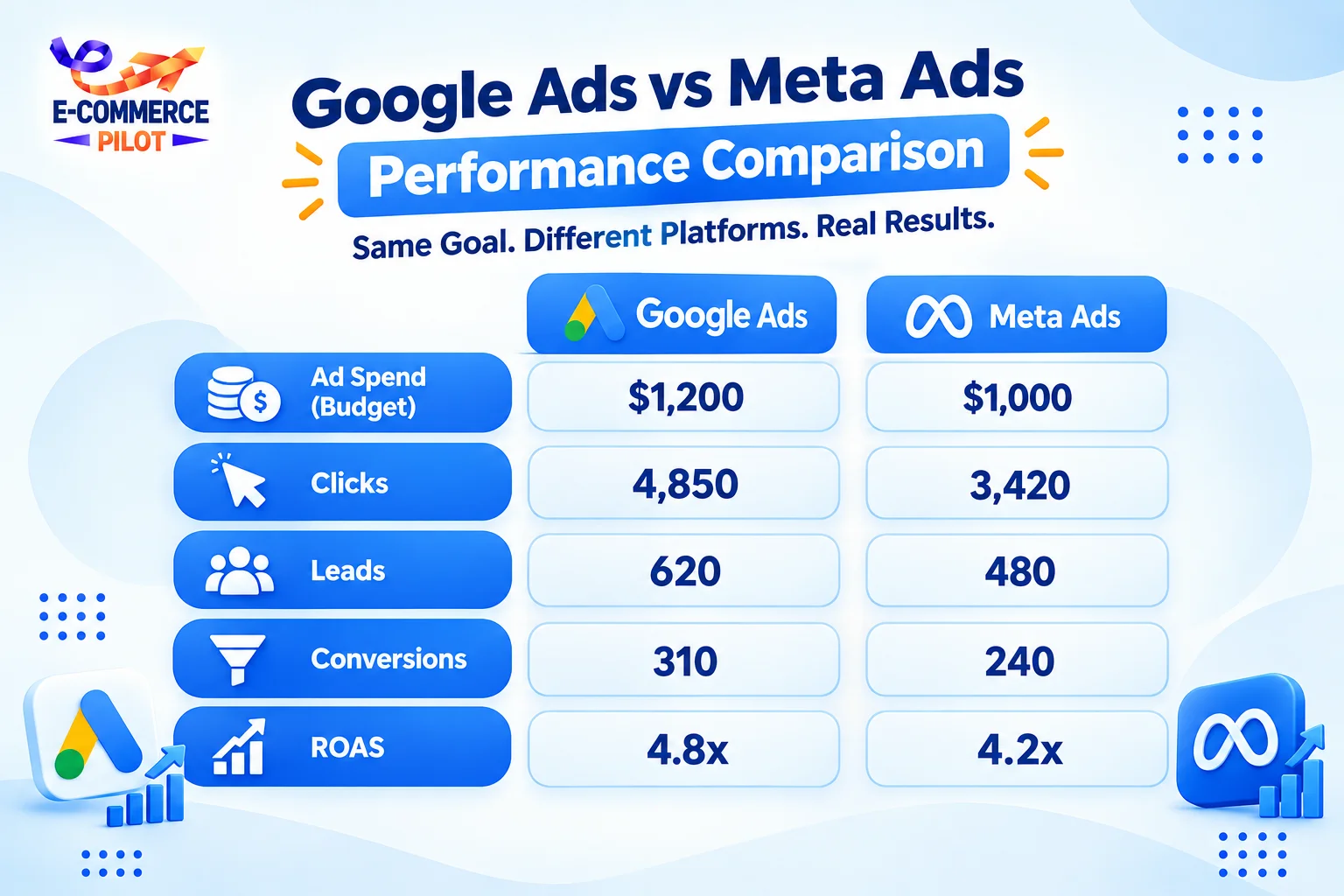
Then compare performance using metrics such as:
- Cost per click
- Conversion rate
- Cost per lead
- Cost per acquisition
- Return on ad spend
- Revenue
Creating Better Ads for Both Platform
Good advertising requires more than choosing the right platform. Your message must match the audience and the stage of the buying process.
Google Ads usually relies heavily on concise text and search intent. Meta Ads, however, gives businesses more room to use images, videos, carousels, and social-style creative.
Match the Message to Search Intent
For Google Ads, use language that closely matches what customers are searching for. Include a clear benefit and relevant call to action.
For example:
- Search keyword: ecommerce website development
- Ad message: Ecommerce Website Development for Growing Brands
- CTA: Get a Free Consultation
The landing page should then provide information that directly supports the advertisement.
Create Scroll-Stopping Meta Creative
Meta users are not always actively looking for your service. Therefore, the creative needs to quickly explain the problem, benefit, or offer.
Use:
- Clear headlines
- Strong product visuals
- Short videos
- Customer-focused benefits
- Simple calls to action
- Consistent branding
The goal is to make the message easy to understand within seconds.
Retargeting Can Connect Both Channels
Retargeting helps businesses reconnect with people who have already interacted with their website or advertising. This can be useful because many visitors do not convert during their first visit.
For example, someone might visit your website through Google Ads but leave without submitting a form. A Meta retargeting campaign can later remind that person about your service or offer.
Similarly, users who interact with Meta content can later be reached through relevant search campaigns when they actively search for your solution.
Tracking Google Ads + Meta Ads Performance
Tracking is essential because clicks alone do not show whether advertising is producing business results. You need to connect advertising activity with leads, purchases, and revenue.
Use accurate conversion tracking across your website and advertising platforms.
Important Metrics to Monitor
Track metrics that relate directly to your business objectives.
- CTR: Shows how often users click your ads.
- CPC: Shows the average cost of each click.
- Conversion Rate: Shows how many visitors take the desired action.
- CPA: Shows the cost of acquiring a customer or lead.
- ROAS: Compares advertising revenue with advertising spend.
- Revenue: Shows the direct financial result.
However, avoid judging a campaign from one metric alone. Look at the complete customer journey.
Common Paid Advertising Mistakes
Businesses can lose budget when campaigns lack clear goals or proper tracking. Fortunately, many problems can be reduced with regular testing and optimization.
Common mistakes include:
- Targeting an audience that is too broad
- Using irrelevant keywords
- Sending traffic to weak landing pages
- Running ads without conversion tracking
- Changing campaigns too frequently
- Ignoring mobile users
- Focusing only on clicks
- Scaling before collecting enough data
A clear campaign structure helps prevent unnecessary spending.
How to Build a Smarter Google Ads + Meta Ads Strategy
A successful paid advertising plan should connect audience research, campaign structure, creative testing, landing pages, and conversion tracking.
Start by identifying your ideal customers and their buying journey. Next, decide which platform should handle search demand and which should support awareness or retargeting.
Then:
- Define your business goal.
- Research your target audience.
- Select suitable campaign types.
- Create relevant ads and landing pages.
- Install conversion tracking.
- Launch controlled tests.
- Review performance regularly.
- Move budget toward campaigns that meet your business goals.
This process creates a more organized approach to paid advertising.
Conclusion
Google Ads and Meta Ads can serve different purposes while supporting the same business goal. Google can help capture existing search demand, while Meta can build awareness, engagement, and retargeting opportunities. Together, they can create a connected customer journey across multiple touchpoints.
However, results depend on proper targeting, strong creative, relevant landing pages, accurate tracking, and ongoing testing. Instead of treating each advertising platform separately, businesses can connect their campaigns around the same audience and conversion goals.
Ready to get more from Google Ads + Meta Ads? Let Ecommerce Pilot plan, manage, and optimize your paid campaigns for better traffic, leads, and sales.[]