
AI search traffic is becoming an important part of the SEO conversation as Google changes how people find information online. AI Overviews now provide summaries within search results, while AI Mode supports longer, conversational searches. As a result, users can get more information without following a traditional blue-link path.
However, the effect is not the same for every website. Some queries may lose clicks because users get their answers directly in Google, while other searches can create new opportunities for sites that appear as cited sources. Therefore, businesses need to measure what is happening instead of assuming that every traffic decline comes from AI.
What Are AI Overviews and AI Mode?
AI Overviews appear within Google’s regular search results and provide an AI-generated summary for certain queries. They can include links to supporting webpages, giving users a way to continue their research. AI Mode takes the experience further by allowing users to ask follow-up questions and explore a topic through a conversational search process.
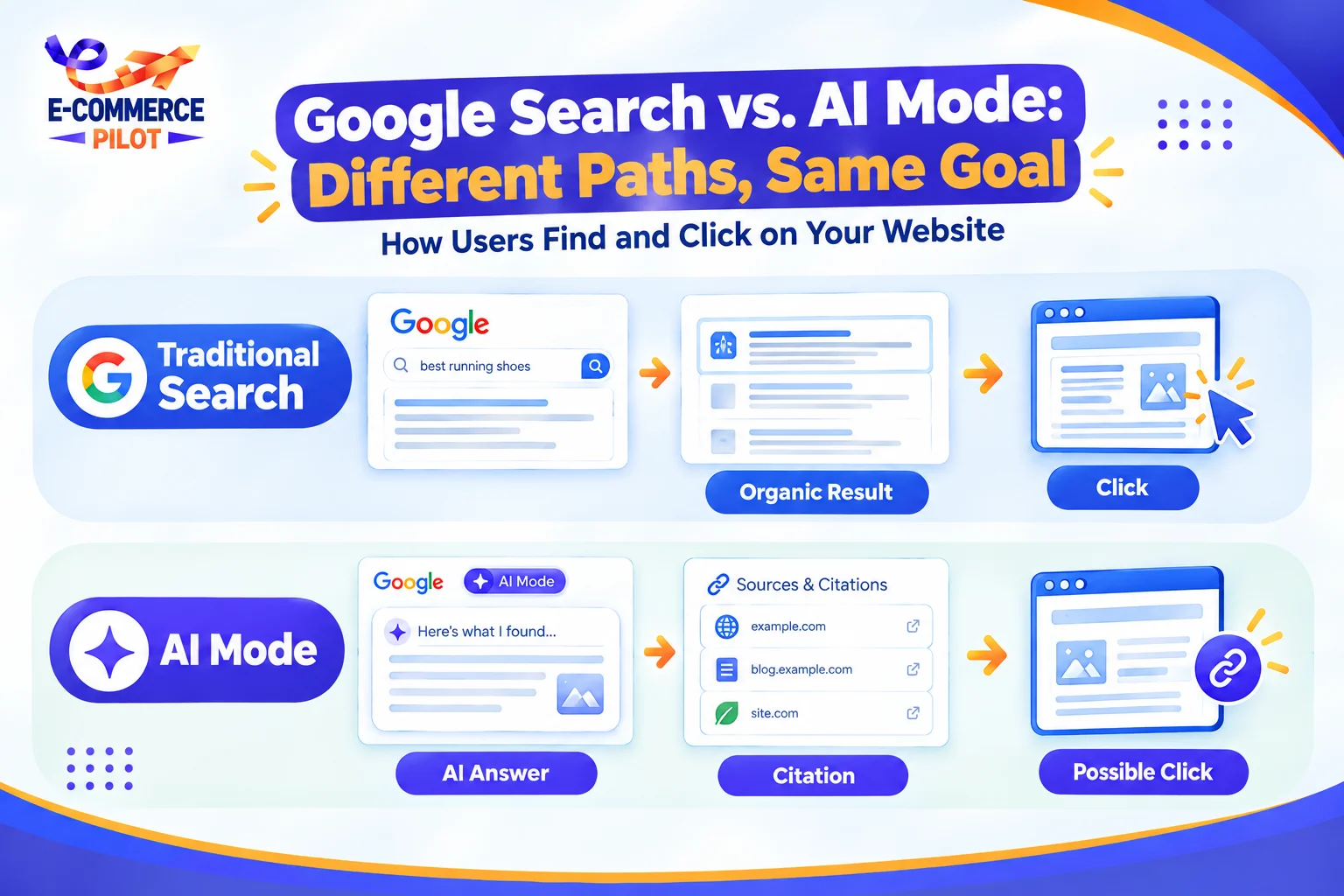
Both features change the path between a search query and a website visit. Instead of scanning several results, users may first interact with Google’s generated response. Consequently, AI search traffic can behave differently from traditional organic traffic.
How AI Overviews Work
An AI Overview can combine information from multiple sources to answer a search query. Google may show supporting links that allow users to visit websites for additional information.
For SEO teams, this creates two important visibility areas:
- Traditional organic rankings
- Inclusion or citation within AI-generated results
- Search impressions and clicks
- Brand mentions during research
Google also states that AI Overviews are counted in Search Console performance reporting, helping site owners analyze their search performance.
How AI Mode Changes Search Behavior
AI Mode allows users to continue a search with additional questions rather than starting a completely new query. This can create longer research journeys and change how users interact with search results.
Semrush’s clickstream research found that only around 6–8% of early AI Mode sessions in its sample resulted in a visit to an external domain. The study therefore suggests that AI Mode can produce a high level of zero-click behavior.
How AI Search Traffic Is Changing
The effect of AI features on AI search traffic depends heavily on search intent, industry, device, and query type. Informational searches can be particularly affected because AI systems can answer simple questions directly.
At the same time, commercial searches are increasingly appearing with AI Overviews. A 2026 Semrush study of more than 600,000 keywords found that AI Overviews on commercial-intent search results increased by 71% during its six-month study period.
Zero-Click Searches and Website Visits
Zero-click searches happen when users complete their search without visiting an external webpage. AI-generated answers can contribute to this behavior because they place useful information directly in the search interface.
However, the data does not support a simple conclusion that every AI Overview reduces clicks. Semrush’s analysis of more than 200,000 keywords found that zero-click rates for the same keywords actually decreased slightly after AI Overviews appeared.
Therefore, businesses should track actual website data instead of treating AI Overviews as an automatic source of traffic loss.
Informational vs. Commercial Searches
Search intent plays a major role in AI search traffic. Simple informational queries can often receive complete answers without requiring a website visit.
Commercial searches are different because users may still need product comparisons, pricing, reviews, specifications, demonstrations, or company information before making a decision.
For example, a question such as “what is technical SEO?” may be answered directly. However, someone comparing ecommerce platforms may still visit several websites before choosing a service.
Does AI Mode Reduce Organic Traffic?
AI Mode can change how people reach websites, but businesses should not assume that every reduction in organic clicks comes from AI. Algorithm updates, seasonality, competition, ranking changes, search demand, and technical problems can also affect traffic.
To understand AI search traffic, compare:
- Impressions before and after AI feature growth
- Organic clicks and click-through rate
- Keyword rankings
- Landing-page sessions
- Conversions and leads
- Branded search activity
- Referral visits from AI platforms
This approach separates actual changes from assumptions.
What Happens to SEO When AI Answers Appear?
SEO still matters because AI search systems need reliable webpages to reference and users still visit websites when they need deeper information. In addition, Google continues to use traditional search signals alongside its generative search experiences.
Rankings Still Matter
Traditional rankings remain an important source of visibility. Strong organic positioning can help a page reach users before they decide whether they need more information.
Therefore, businesses should continue improving content quality, technical SEO, internal linking, page experience, and search intent alignment. These fundamentals support both traditional search visibility and AI search traffic.
Citations Can Create New Visibility
AI-generated answers can include links to websites used as supporting sources. A citation does not guarantee a visit, but it can place a brand in front of someone during an important research stage.
This means SEO measurement needs to look beyond clicks. Visibility, mentions, citations, branded searches, and assisted conversions can also provide useful signals.
How to Protect AI Search Traffic
Businesses should build pages that provide information users cannot easily replace with a short AI-generated answer. Specific examples, original insights, product information, comparisons, data, case studies, and expert explanations can give users a reason to continue to the website.
Create Content That Answers Real Questions
Start with the questions your customers actually ask. Then provide a direct answer followed by useful context, examples, and supporting evidence.
Use clear headings, short paragraphs, lists, FAQs, and descriptive page elements. As a result, both readers and search systems can understand the page more easily.
Build Topic Depth and Internal Links
Create connected content around important topics instead of publishing isolated articles. Link related pages naturally so users can move from basic information to deeper resources.
For example, an ecommerce website can connect product guides, category pages, comparison articles, buying guides, and supporting educational content.
Improve Technical SEO
Technical SEO remains essential for AI search traffic because search engines need to access, understand, and index your pages.
Check:
- Crawling and indexing
- Mobile usability
- Page speed
- Internal links
- Canonical URLs
- Structured data
- XML sitemaps
- Content accessibility
How to Measure AI Search Traffic
Google Search Console can help you monitor impressions, clicks, CTR, and search performance. Analytics can then show what happens after users reach your website.
Track your highest-value pages and compare their performance over time. Also, monitor branded searches, conversions, assisted conversions, and referral traffic from AI platforms.
Current tools are also adding more ways to separate AI visibility from traditional search performance. For example, Semrush’s Top Pages reporting includes sources such as organic search, AI Overviews, AI Mode, ChatGPT, and Gemini.
The Future of AI Search and Website Traffic
AI search traffic will continue to change as users adopt new search habits. Semrush’s analysis of billions of web visits found that AI-driven traffic grew during 2025, while organic search remained much larger overall.
That difference matters. AI search is growing, but it does not mean traditional SEO has stopped working. Instead, businesses need to monitor multiple visibility paths and understand which searches generate impressions, visits, leads, and sales.
Conclusion
AI Overviews and AI Mode are changing the way people interact with Google, but their effect on AI search traffic varies by query and website. Informational content may face more zero-click behavior, while commercial searches can create new opportunities for visibility and citations. The practical response is to monitor real data, improve useful content, maintain strong technical SEO, and create pages that give users a reason to visit beyond a basic answer.
Want to turn changing search behavior into more qualified website traffic? Let Ecommerce Pilot build an SEO strategy focused on visibility, clicks, and conversions.