
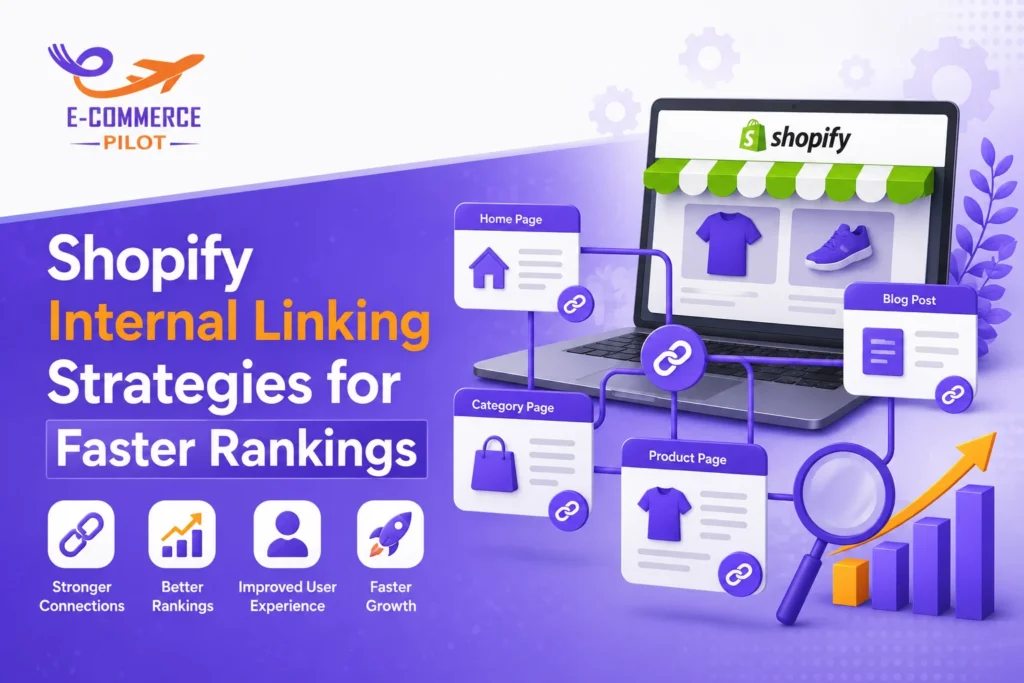
Shopify Internal Linking Strategies play a major role in ecommerce SEO. A strong internal linking structure helps search engines crawl your store more efficiently. Moreover, it guides users to important pages and improves product visibility. Many Shopify stores focus only on backlinks. However, they often ignore internal links that can support rankings faster.
Internal links connect pages within your website. Therefore, they help Google understand page relationships and content hierarchy. They also distribute authority across product pages, collections, and blogs. When done correctly, Shopify Internal Linking Strategies improve indexing, user engagement, and conversions.
In this guide, you will learn practical ways to build a better internal linking structure for your Shopify store.
What Are Internal Links in Shopify?
Internal links connect one page of your Shopify store to another page on the same domain. These links may point to products, collections, blogs, or policy pages. For example, a product page can link to a related collection page. Similarly, a blog post can direct visitors to featured products.
Unlike backlinks, internal links remain under your control. As a result, you can organize them strategically for SEO and navigation. Search engines use these links to crawl pages and understand which content matters most.
A clear linking structure also improves the shopping journey. Visitors can move between pages quickly, which keeps them engaged longer.
Why Shopify Internal Linking Strategies Matter for SEO
Search engines rely on internal links to discover and rank pages. If your store lacks proper connections between pages, important content may remain hidden. Consequently, your rankings can suffer.
Strong Shopify Internal Linking Strategies provide several SEO benefits:
- Help Google crawl pages faster
- Pass link authority to important pages
- Improve keyword relevance
- Reduce orphan pages
- Increase time on site
- Support better navigation
Additionally, internal links guide visitors toward related products and collections. This process often increases page views and sales opportunities.
Shopify Internal Linking Strategies That Improve Rankings Fast
Link High-Authority Pages to Important Products
Some pages naturally receive more traffic and backlinks. These pages usually include popular blogs, homepage sections, or top-ranking collections. Therefore, you should use them to support product pages that need more visibility.
For instance, if a blog post ranks well on Google, add contextual links to related products within the article. This approach passes authority to product pages and improves crawl frequency.
However, make sure the links appear naturally inside the content. Forced links often reduce readability.
Use Keyword-Rich Anchor Text
Anchor text tells search engines what the linked page is about. Therefore, descriptive anchor text helps improve keyword relevance.
Instead of using generic text like “click here,” use phrases related to the destination page. For example, “best running shoes collection” provides more SEO value than vague wording.
At the same time, avoid repeating the same anchor text everywhere. Search engines may view excessive repetition as spammy behavior. Consequently, use variations naturally throughout your store.
Add Internal Links Between Related Products
Related product links help users find similar items quickly. Moreover, they increase the chances of cross-selling.
For example, a product page for hiking boots can link to hiking socks or backpacks. These connections create a logical shopping path while helping search engines crawl deeper pages.
Shopify apps can automate related product suggestions. Still, manual linking often provides better relevance and control.
Build Collection Page Internal Links
Collection pages hold strong SEO value because they group related products together. Therefore, they should connect with other collections and products strategically.
For example, a “Men’s Shoes” collection can link to “Running Shoes” or “Casual Sneakers.” This structure improves topical relevance and strengthens category authority.
Additionally, collection descriptions provide good opportunities for contextual links. Use them wisely without overloading the page.
Use Blog Content for Internal Linking
Blogs remain one of the best tools for internal linking. Informational content attracts traffic from search engines. Afterward, internal links guide visitors toward product and collection pages.
For example, a blog about winter fashion can link to jackets, boots, and accessories collections. This method improves both SEO and user flow.
Furthermore, blogs help create topic clusters. A topic cluster connects related articles and product pages around one subject. As a result, search engines understand your expertise more clearly.
Add Breadcrumb Navigation
Breadcrumbs improve navigation by showing users where they are within the site structure. At the same time, they create additional internal links for search engines.
A typical breadcrumb looks like this:
Home > Men’s Clothing > Jackets > Winter Jacket
This structure helps visitors move between categories quickly. Moreover, Google often displays breadcrumbs in search results, which improves visibility.
Most Shopify themes support breadcrumbs. If not, you can install apps or edit theme code manually.
Improve Footer Internal Linking
Footer links help search engines find important pages consistently. However, many Shopify stores waste footer space with unnecessary links.
Instead, focus on pages that matter most, such as:
- Main collections
- Best-selling products
- Blog categories
- Contact page
- Shipping information
Keep the footer organized and user-friendly. Too many links can reduce value and create confusion.
Use Navigation Menus Strategically
Your navigation menu acts as one of the strongest internal linking areas on the site. Therefore, important collections and categories should appear clearly in the main menu.
A clean menu structure improves both SEO and user experience. Visitors can find products faster, while search engines understand site hierarchy more effectively.
Additionally, mobile navigation deserves equal attention. Many ecommerce shoppers browse from smartphones. Therefore, menus should remain simple and easy to use on smaller screens.
Fix Broken Internal Links
Broken links create poor user experiences and waste crawl budget. Therefore, you should check your Shopify store regularly for link issues.
SEO tools like Screaming Frog, Ahrefs, and Google Search Console can help identify broken internal links. Afterward, update or redirect them properly.
Regular audits also help you identify orphan pages. These are pages without internal links pointing to them. Since search engines struggle to find them, rankings often remain weak.
Common Internal Linking Mistakes Shopify Stores Make
Many Shopify stores add internal links without a strategy. As a result, they create SEO problems instead of improvements.
Here are common mistakes to avoid:
Using Too Many Links on One Page
Excessive links reduce clarity and dilute authority. Therefore, keep links relevant and useful.
Ignoring Deep Pages
Many stores only link to homepage categories. However, deep product pages also need support.
Using Generic Anchor Text
Weak anchor text provides little SEO value. Instead, use descriptive wording naturally.
Creating Orphan Pages
Every important page should receive at least one internal link from another page.
Linking Irrelevant Pages
Links should match user intent and page context. Random linking patterns confuse both users and search engines.
Final Thoughts on Shopify Internal Linking Strategies
Shopify Internal Linking Strategies help search engines crawl your store efficiently while guiding visitors toward important pages. Moreover, they improve keyword relevance, indexing, and product visibility. Many stores overlook internal linking, yet it remains one of the easiest SEO improvements to implement.
Focus on linking related products, collections, blogs, and high-authority pages naturally. Additionally, audit your store regularly to fix broken links and improve site structure. Consistent optimization will support stronger rankings and better user engagement over time.
Need better Shopify SEO results? Let our team build a smart internal linking strategy that drives more traffic and sales.