
An effective ecommerce project timeline sets the foundation for a successful online store. It helps teams stay organized, meet deadlines, and avoid costly delays. Without a clear timeline, projects often drift, and budgets increase. Therefore, planning each stage matters from day one.
In this guide, you will learn how an ecommerce project moves from idea to launch. Moreover, you will understand each phase, expected timelines, and common challenges. As a result, you can plan better and launch faster.
Ecommerce Project Timeline Overview (From Idea to Launch)
An ecommerce project timeline outlines every step required to build and launch an online store. Typically, projects take between 4 to 16 weeks. However, timelines vary based on features and complexity.
For example, a basic store launches faster than a custom-built platform. In addition, team size and budget also affect the timeline. Therefore, defining scope early helps avoid delays.
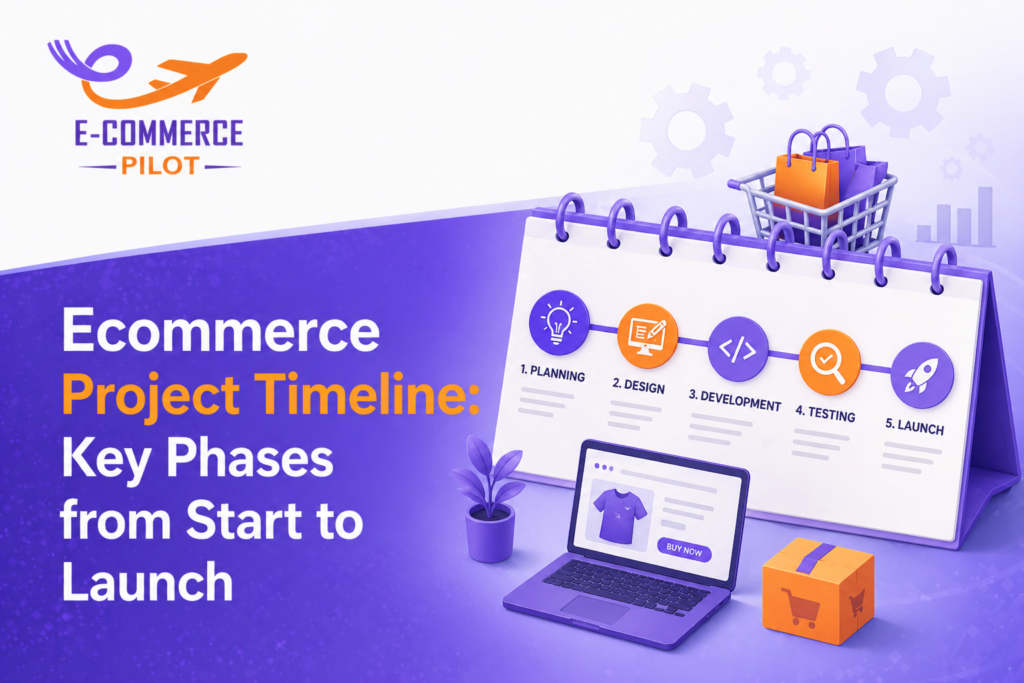
Each project includes planning, design, development, testing, and launch. Consequently, skipping any step can impact performance and sales.
Ecommerce Planning Phase in Project Timeline
The planning phase defines the direction of your store. First, conduct market research to understand your competitors. Then, identify your target audience and their needs.
Next, choose a business model such as B2C or D2C. Meanwhile, set clear goals for sales and growth. Also, define your budget and available resources.
After that, create a roadmap with milestones. As a result, your team can track progress easily. Strong planning reduces confusion and speeds up execution.
Ecommerce Platform Selection in Project Timeline
Choosing the right platform plays a key role in your timeline. For instance, platforms like Shopify offer quick setup. On the other hand, WooCommerce provides flexibility but may take longer.
You must also decide between hosted and self-hosted solutions. While hosted platforms save time, self-hosted options offer more control.
In addition, consider scalability and future growth. Therefore, select a platform that supports your long-term goals. A wrong choice can slow down development later.
Ecommerce Website Design Phase Timeline
Design shapes how users interact with your store. First, create wireframes to plan layout and structure. Then, focus on user-friendly navigation.
Moreover, apply a mobile-first approach since most users shop on phones. At the same time, maintain consistent branding across pages.
Design key pages like homepage, product pages, and checkout carefully. As a result, users can browse and buy without confusion. Good design improves conversions and reduces bounce rates.
Ecommerce Development Phase Timeline
Development brings your design to life. Frontend developers build the user interface, while backend developers manage functionality.
Next, integrate payment gateways and shipping systems. In addition, configure taxes and checkout flows.
You should also add essential features such as product filters and search options. Meanwhile, ensure the site loads quickly. Slow websites often lose customers.
Therefore, efficient development keeps your timeline on track and improves performance.
Ecommerce Content Creation Timeline
Content plays a major role in ecommerce success. First, write clear and SEO-friendly product descriptions. Then, create category pages with relevant keywords.
Upload high-quality images and videos to attract buyers. In addition, write blog posts to drive organic traffic.
Also, include important pages like privacy policy and return policy. As a result, customers trust your store more. Content delays can slow the entire project, so prepare it early.
Ecommerce SEO Setup in Project Timeline
SEO ensures your store ranks in search engines. Start with keyword research to target relevant terms. Then, optimize titles, meta descriptions, and URLs.
Also, improve technical SEO by increasing site speed and mobile performance. Meanwhile, add schema markup to enhance search visibility.
Internal linking helps users navigate easily. Therefore, SEO should not wait until the end. Early optimization saves time and improves rankings faster.
Ecommerce Testing and QA Phase Timeline
Testing ensures your store works correctly before launch. First, check all functions such as cart and checkout. Then, test across different devices and browsers.
Next, analyze performance and loading speed. Fix any bugs that appear.
You should also conduct user acceptance testing. As a result, real users can identify issues you might miss. Proper testing prevents costly errors after launch.
Ecommerce Pre-Launch Checklist Timeline
Before going live, complete a final review. Check all content for accuracy. Then, verify SEO elements are in place.
Set up analytics tools to track performance. In addition, secure your website with backups and security measures.
You may also run a soft launch to test real traffic. Therefore, this step ensures everything works smoothly before the official launch.
Ecommerce Launch Phase Timeline
The launch marks the moment your store goes live. First, connect your domain and finalize DNS settings. Then, monitor performance closely.
At the same time, start marketing campaigns through email and social media. Early promotion drives initial traffic.
You should also respond to customer feedback quickly. As a result, you can fix issues and improve user satisfaction.
Ecommerce Post-Launch Optimization Timeline
Work does not stop after launch. Instead, track key performance indicators such as traffic and conversions.
Analyze user behavior to identify improvement areas. Then, adjust design or content accordingly.
You should also run marketing campaigns to increase sales. Meanwhile, continue SEO efforts for long-term growth. Continuous improvement keeps your store competitive.
Common Delays in Ecommerce Project Timeline
Many projects face delays due to poor planning. For example, unclear requirements often cause confusion.
Content delays also slow progress. In addition, technical issues can extend timelines.
Frequent changes in features create scope creep. Therefore, clear communication helps avoid these problems.
How to Speed Up Your Ecommerce Project Timeline
You can reduce delays with smart strategies. First, use ready-made themes instead of custom designs. Then, focus on essential features only.
Work with experienced developers to avoid errors. Also, prepare content before development starts.
Using agile methods helps teams adapt quickly. As a result, projects move faster and stay within deadlines.
Ecommerce Project Timeline Example (Week-by-Week Breakdown)
A typical ecommerce project timeline follows this structure:
- Week 1–2: Planning and research
- Week 3–4: Design phase
- Week 5–8: Development
- Week 9–10: Content and SEO
- Week 11–12: Testing and launch
However, timelines may vary based on project size. Therefore, flexibility is important.
Conclusion
A clear ecommerce project timeline ensures smooth execution from start to launch. It helps teams stay focused and complete tasks on time. Moreover, it reduces risks and improves overall performance.
When you follow a structured timeline, you avoid delays and launch confidently. Therefore, plan carefully and execute each phase with precision. A strong ecommerce project timeline leads to better results and long-term growth.
Launch your store faster with our expert ecommerce solutions—get started today!