
What will you learn?
What Are Paid Media Campaigns?
Paid Media campaigns are advertising activities in which businesses pay to show their messages to selected audiences. These ads can appear on search engines, social networks, websites, and video platforms. Unlike organic marketing, paid advertising can bring targeted visitors without waiting for search rankings to improve.
Moreover, businesses can control their budgets, choose specific audiences, and measure campaign performance. As a result, they can identify which ads attract customers and which ones need improvement.
How Paid Advertising Works
Paid advertising connects businesses with users based on their interests, search terms, location, and online behavior. Advertisers set a budget, choose an audience, and create ads that encourage people to take action.
- Select a platform that matches your business goals.
- Choose keywords or audience groups.
- Create ads with clear messages and calls to action.
- Track clicks, leads, purchases, and advertising costs.
Main Paid Media Channels
Different advertising platforms serve different purposes. For example, search ads target people who are actively looking for a solution, while social ads introduce products to relevant audiences.
Businesses can use Google Ads, Facebook Ads, Instagram Ads, YouTube Ads, and display networks. Therefore, selecting channels based on customer behavior helps reduce wasted spending.
Types of Paid Media Campaigns for Business Growth
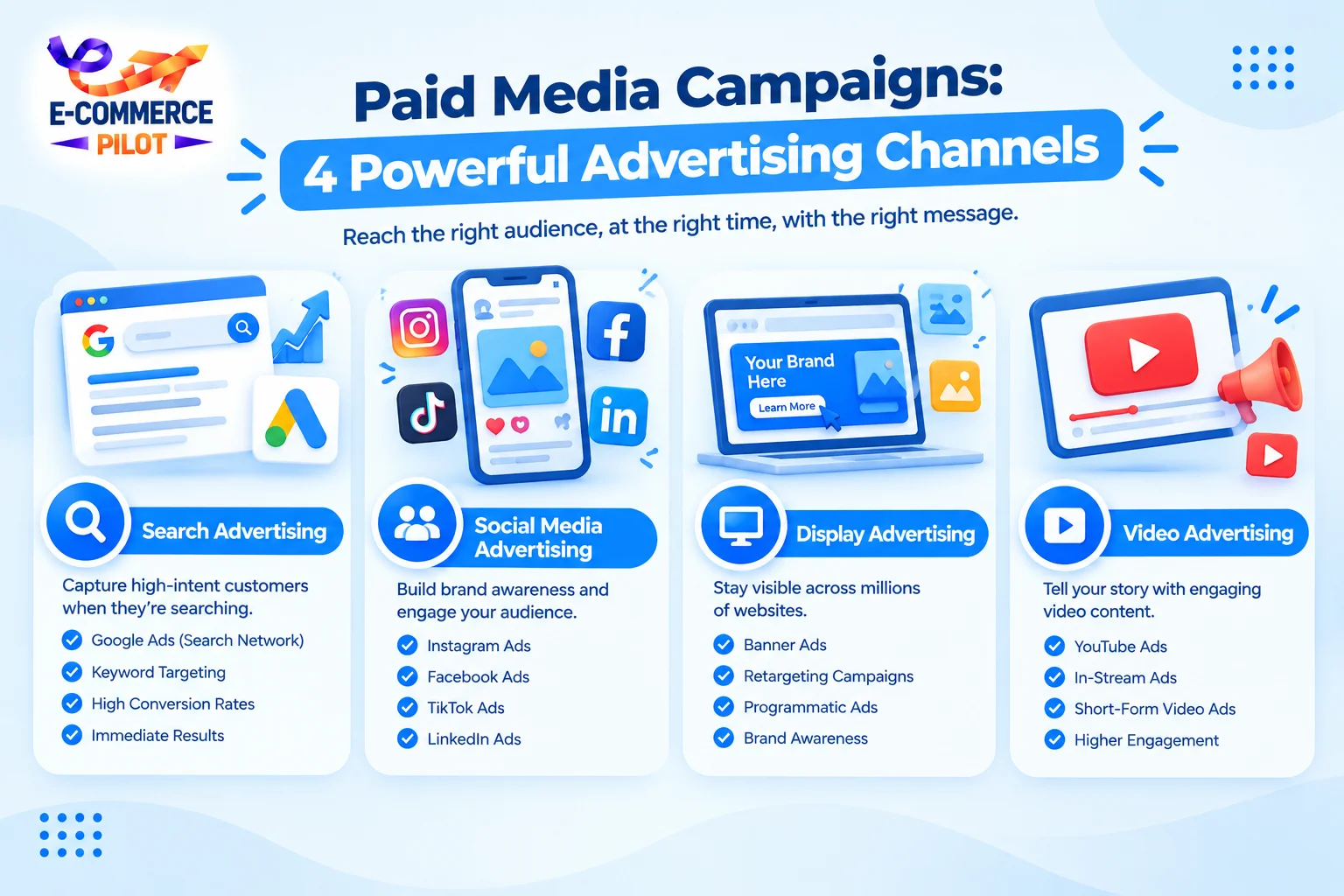
Each advertising channel supports a different stage of the customer journey. Some campaigns attract people who are ready to purchase, while others build awareness and interest. Therefore, businesses should select formats based on their products, audience, and marketing goals.
A balanced approach can help companies reach new customers and reconnect with people who have already visited their websites.
Search Advertising
Search advertising displays sponsored listings when users search for specific products or services. For instance, a web development company can target searches related to website design services.
These ads can attract high-intent visitors because users are already looking for relevant solutions. However, keyword selection, ad relevance, and landing page quality all affect results.
Social Media Advertising
Social media advertising helps businesses reach audiences on platforms such as Facebook, Instagram, and LinkedIn. Advertisers can use images, videos, carousel ads, and lead forms to promote their offers.
Additionally, audience targeting allows businesses to reach users based on interests, demographics, and other available signals. Strong visuals and clear messaging can encourage more people to engage.
Display and Video Advertising
Display ads use banners and visual placements across participating websites and apps. Meanwhile, video ads communicate product benefits through short demonstrations, tutorials, and customer stories.
These formats can support brand awareness and remarketing. However, businesses should match the creative format to their audience and measure whether the campaign contributes to meaningful results.
How to Build a Successful Paid Media Strategy
A successful advertising strategy starts with a clear plan rather than random ad spending. Businesses need to understand their customers, define measurable goals, and select platforms that support those goals.
Furthermore, they should prepare suitable landing pages and tracking tools before launching ads. This approach makes it easier to identify problems and improve performance over time.
Set Clear Goals and Budgets
First, decide what you want your campaign to achieve. Your goal might be more website visits, qualified leads, product sales, or brand awareness.
Next, set a realistic budget based on your resources and expected results. Start with a controlled test, review the data, and increase spending on campaigns that meet your targets.
Define Your Target Audience
Audience research helps you understand who is most likely to purchase your products or services. Consider customer needs, location, interests, search behavior, and common buying concerns.
Then, create audience groups that reflect these differences. For example, an online store can target new shoppers separately from previous visitors. This allows you to show more relevant messages to each group.
Create Ads and Landing Pages
Your ad should communicate one clear benefit and guide users toward a specific action. Use direct headlines, useful descriptions, relevant images, and calls to action such as “Get a Quote” or “Shop Now.”
However, the landing page must support the promise made in the ad. Keep the page easy to navigate, mobile-friendly, and focused on the next step. Otherwise, even a strong ad may generate clicks without conversions.
Ways to Improve Paid Media Campaign Performance
Once your campaigns are live, regular reviews help you understand what works. Instead of judging results by clicks alone, examine conversions, acquisition costs, and revenue.
Additionally, small improvements to targeting, ad copy, and landing pages can make a difference. Use real performance data to guide decisions rather than changing several elements without a clear reason.
Test Ad Creatives and Copy
A/B testing compares different versions of an ad to see which performs better. You can test headlines, images, calls to action, and audience segments.
Change one important element at a time whenever practical. Consequently, you can better understand which change influenced the results and apply those lessons to future campaigns.
Track Conversions and Optimize Spending
Conversion tracking measures actions such as purchases, form submissions, phone calls, and sign-ups. It helps you understand whether advertising generates business value.
Review cost per click (CPC), cost per acquisition (CPA), conversion rate, and return on ad spend (ROAS). Then, adjust bids, budgets, and targeting based on reliable data. Also, check tracking accuracy before making major spending decisions.
Common Paid Advertising Mistakes to Avoid
Many businesses waste advertising budgets because they launch campaigns without clear goals or proper tracking. Others target broad audiences, use weak ad copy, or send visitors to unrelated landing pages.
To avoid these problems, define success before launch and review campaign data regularly. In addition, use negative keywords where relevant, remove unsuitable placements when possible, and check mobile page performance. Most importantly, do not increase spending until you understand the results.
How to Measure Paid Media Campaign Success
Campaign success depends on your original objective. For example, an online store may focus on revenue and ROAS, while a service company may measure qualified leads and cost per lead.
Use platform reporting and website analytics to compare performance over time. Also, consider lead quality and profit instead of relying only on impressions or clicks. These measures help you decide where to allocate your budget and which campaigns need further testing.
Conclusion
Paid Media campaigns can help businesses attract relevant visitors, generate leads, and increase sales when supported by clear goals and consistent measurement. By selecting suitable channels, targeting the right audiences, testing ad creatives, and improving landing pages, you can make better use of your advertising budget. Ultimately, successful campaigns depend on useful data, relevant messaging, and ongoing optimization.
Ready to grow your business with paid advertising? Contact Ecommerce Pilot for strategic digital marketing and conversion-focused website solutions.