

What will you learn?
What Is Keyword Stuffing?
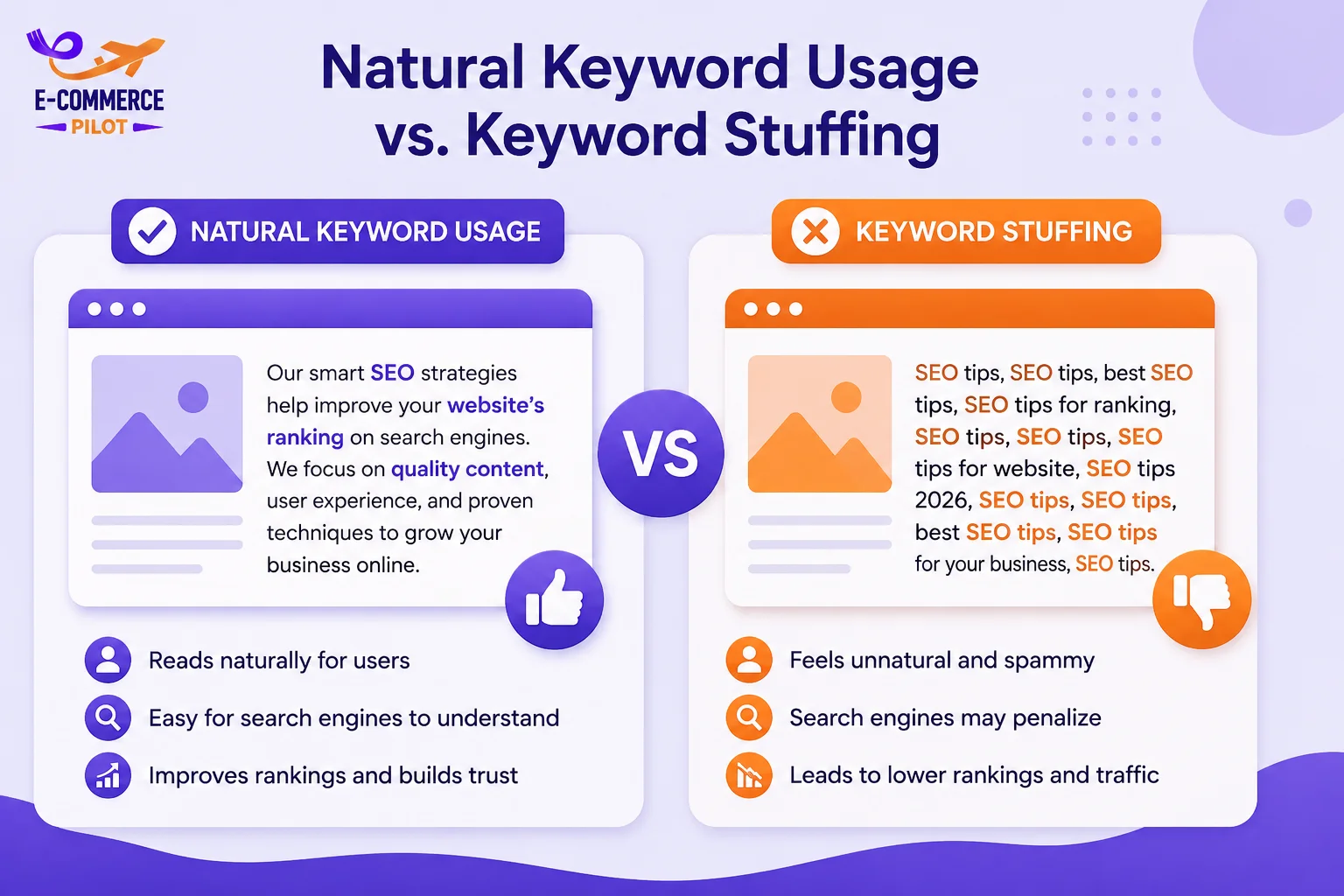
Keyword stuffing happens when a website repeats the same keyword too many times in an attempt to improve search rankings. Although this method produced results many years ago, search engines now recognize unnatural writing patterns. As a result, pages with excessive keyword repetition often lose credibility. Instead, Google prefers content that answers questions naturally while providing useful information for readers.
Different Types of Keyword Stuffing
Every form of keyword stuffing reduces content quality. Therefore, understanding these practices helps you avoid SEO problems before they affect your website.
Excessive Keyword Repetition
Some writers place the same keyword in nearly every sentence. Consequently, the article becomes difficult to read and sounds repetitive. Visitors usually leave such pages quickly because they provide a poor reading experience.
Hidden Keywords
Older websites sometimes hid keywords by matching the text color with the page background. While users could not see them, search engines could. Today, Google easily detects this tactic and ignores its intended purpose.
Keyword Lists
Some pages include long lists of keywords without meaningful content. Although they target multiple search terms, they rarely answer user questions. Therefore, these pages usually perform poorly in search results.
Why Keyword Stuffing No Longer Works
Google’s ranking systems have changed significantly over the past decade. Instead of rewarding repeated phrases, they measure content usefulness, authority, and user satisfaction. Therefore, keyword stuffing no longer improves rankings and may even reduce visibility.
Google Understands Search Intent
Google analyzes what users actually want instead of counting repeated words. Because of this, articles that answer questions clearly perform much better than pages focused only on keyword repetition.
User Experience Matters
Visitors expect content that is simple, helpful, and easy to understand. If they repeatedly see the same phrase, they often leave the page. As a result, poor engagement signals can negatively affect rankings.
Content Quality Comes First
High-quality content includes useful explanations, relevant examples, and clear organization. Consequently, websites that focus on solving problems usually perform better than those relying on outdated SEO tactics.
How Google Detects Keyword Stuffing
Modern search engines use advanced algorithms and artificial intelligence to evaluate content. Therefore, they can recognize unnatural keyword placement without difficulty. Rather than rewarding repetition, Google evaluates whether the information provides genuine value.
Keyword Frequency Analysis
Google compares keyword usage with the overall context of the article. If the same phrase appears too often, the content may appear unnatural.
Semantic Search
Search engines understand related words and similar meanings. Therefore, writers no longer need to repeat one keyword excessively. Using relevant terms creates stronger and more complete content.
User Behavior Signals
Google measures how visitors interact with pages. If users leave quickly or fail to engage with the content, search engines may interpret it as low quality.
Better SEO Strategies Than Keyword Stuffing
Successful SEO now depends on creating valuable content that satisfies user intent. Therefore, replacing outdated practices with modern techniques produces better long-term results.
Write Naturally
Always write for readers before search engines. When the content flows naturally, keywords fit smoothly into sentences without sounding forced. Use simple language, short sentences, and a clear structure to improve readability. As a result, visitors stay engaged and are more likely to continue reading your content.
Use Related Keywords
Instead of repeating one phrase, include related keywords such as SEO writing, search intent, keyword optimization, Google ranking, and content quality. This approach increases topic relevance while improving readability. It also helps search engines understand your content better and match it with relevant user searches. Therefore, your pages have a better chance of ranking for multiple related terms.
Build Helpful Content
Answer common questions, provide practical advice, and organize information clearly. As a result, readers stay longer on your website and are more likely to trust your content. Include examples, useful tips, and actionable advice that readers can apply immediately. Helpful content also encourages visitors to return and share your pages with others.
Best Practices for Natural Keyword Optimization
Good optimization focuses on balance instead of repetition. Therefore, every keyword should support the topic without interrupting the reading experience.
Place Keywords Strategically
Include the focus keyword in the title, introduction, meta tags, selected headings, image alt text, and conclusion. Avoid adding it where it feels unnecessary.
Improve Content Structure
Use descriptive headings, short paragraphs, bullet points, and internal links. Consequently, visitors can find information quickly and navigate the page easily.
Update Existing Content
SEO changes regularly, so reviewing older articles keeps them accurate and competitive. Fresh information also improves user confidence.
Common Mistakes to Avoid
Many websites continue using outdated optimization methods because they believe more keywords mean better rankings. However, this approach often creates the opposite result. Therefore, avoiding common mistakes helps protect your SEO performance.
Ignoring User Intent
Writing only for keywords instead of answering questions reduces content value. Readers expect useful information that solves their problems.
Overusing Exact Match Keywords
Repeating the same phrase in every paragraph makes the article sound unnatural. Instead, use synonyms and related keywords where appropriate.
Forgetting Readability
Complex sentences and repeated phrases reduce engagement. Therefore, keep paragraphs short and use transition words to maintain a smooth reading experience.
Conclusion
Keyword Stuffing is no longer an effective SEO strategy in 2026. Google’s algorithms now reward websites that provide useful, relevant, and reader-friendly content. Instead of repeating the same keyword, focus on search intent, content quality, and natural optimization. By following modern SEO practices, you can improve rankings, attract more visitors, and create content that performs well for years to come.
Need SEO content that ranks on Google? Let our experts create optimized, high-quality content that brings more traffic and grows your business.