
What will you learn?
What Are Email Marketing Strategies for Ecommerce Success?
Email marketing is a direct communication channel that helps ecommerce businesses connect with customers through targeted messages. It allows brands to promote products, share updates, and encourage repeat purchases. In addition, email marketing offers one of the highest returns on investment among digital marketing channels. As a result, businesses of all sizes continue to invest in email campaigns.
These strategies include list building, customer segmentation, automation, personalization, and performance tracking. When used correctly, they can increase customer engagement and drive consistent revenue. Furthermore, they help businesses create long-term relationships with their audience rather than focusing only on one-time sales.
Understanding the Role of Email Marketing
Email marketing plays an important role throughout the customer journey. It supports customer acquisition, product promotion, and customer retention efforts. Moreover, it gives businesses full control over communication without depending on social media algorithms.
Direct Communication with Customers
Emails reach customers directly in their inboxes. Therefore, brands can deliver personalized offers and important updates. This direct connection often leads to stronger customer relationships and improved trust.
Cost-Effective Marketing Channel
Compared to paid advertising, email marketing requires a lower investment. At the same time, it can generate significant revenue when campaigns are properly optimized. Consequently, many ecommerce businesses prioritize email marketing in their growth strategy.
Why Email Marketing Matters for Online Stores
Online stores face increasing competition every year. Therefore, businesses need reliable methods to stay connected with customers. Email marketing helps brands maintain communication while encouraging repeat purchases and higher engagement.
Unlike social media platforms, email provides direct access to your audience. Furthermore, it allows businesses to send targeted messages based on customer behavior. Because of this, email campaigns often generate higher conversion rates than many other channels.
Key Benefits of Email Marketing
Email marketing supports multiple business goals. It helps increase sales, improve retention, and strengthen customer relationships. Additionally, it allows businesses to deliver relevant content to different audience segments.
Higher Customer Retention
Keeping existing customers is often more profitable than acquiring new ones. Therefore, email campaigns can remind customers about products, promotions, and new arrivals. As a result, customers are more likely to return.
Improved Conversion Rates
Targeted emails help customers make purchasing decisions. Moreover, personalized recommendations increase the chances of conversions. Consequently, businesses can generate more revenue from their subscriber base.
Building a High-Quality Email List
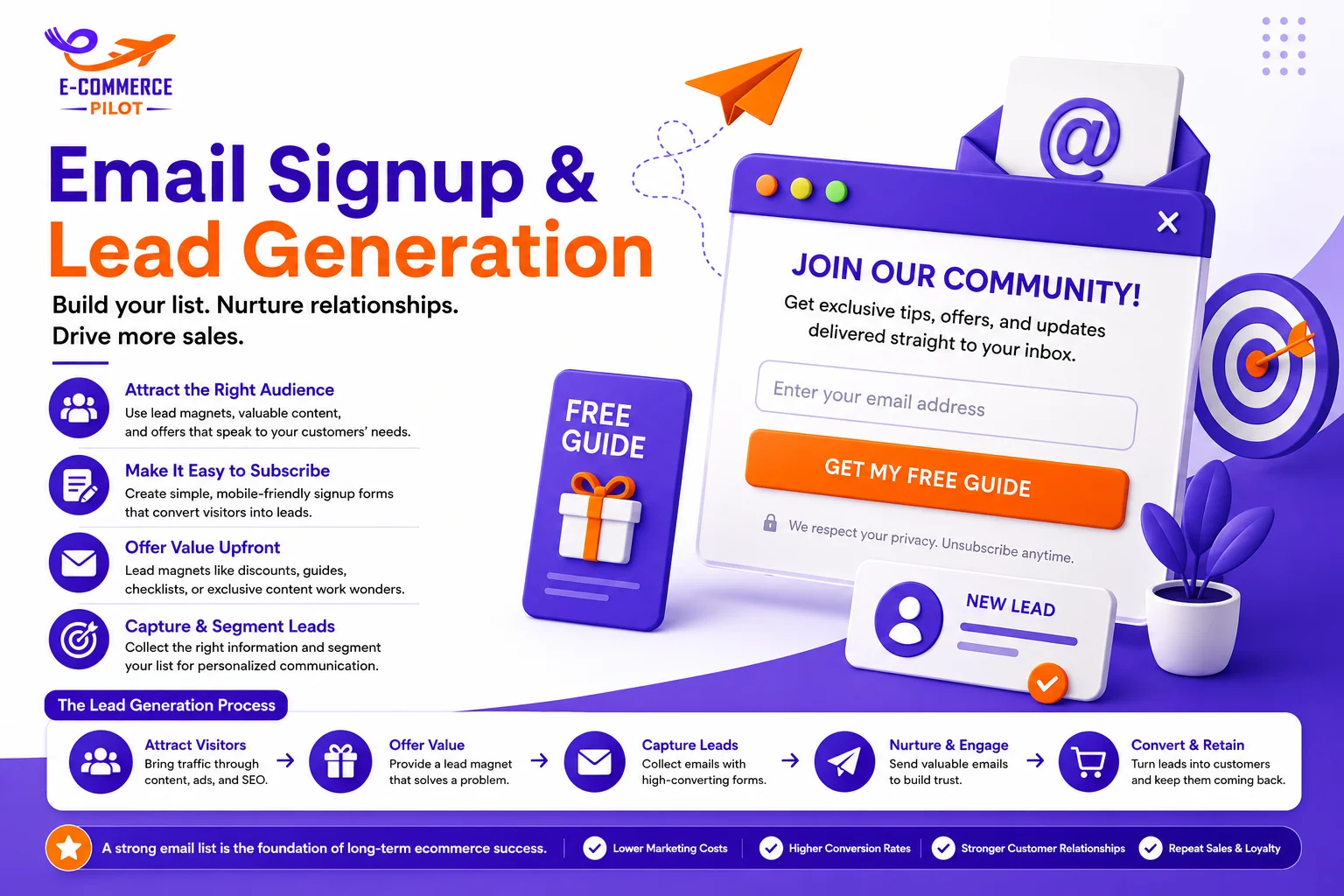
A strong email list is the foundation of successful email marketing. Without quality subscribers, even the best campaigns may struggle to perform. Therefore, ecommerce businesses should focus on attracting interested and engaged customers.
Growing an email list requires value and trust. In addition, businesses should offer useful incentives that encourage visitors to subscribe. This approach helps build a list filled with potential buyers rather than inactive contacts.
Effective List-Building Techniques
Different methods can help attract subscribers. However, the best approach depends on your target audience and business goals.
Offer Valuable Lead Magnets
Discount codes, exclusive offers, and free resources encourage users to join your list. Furthermore, these incentives provide immediate value to subscribers.
Use Strategic Signup Forms
Place signup forms on product pages, blogs, and checkout pages. As a result, visitors can easily subscribe without disrupting their shopping experience.
Customer Segmentation for Better Results
Not all customers have the same interests or buying behavior. Therefore, sending identical emails to everyone can reduce engagement. Customer segmentation helps businesses create more relevant and effective campaigns.
Segmentation allows marketers to group subscribers based on demographics, purchase history, browsing behavior, and engagement levels. Consequently, businesses can deliver highly relevant messages that improve results.
Popular Segmentation Methods
Different segmentation techniques help businesses target customers more effectively. Moreover, they support personalized communication at scale.
Purchase History Segmentation
Customers who purchased specific products may be interested in related items. Therefore, businesses can send product recommendations based on previous purchases.
Engagement-Based Segmentation
Subscribers who frequently open emails behave differently from inactive users. As a result, businesses can create separate campaigns for each group.
Creating High-Converting Email Campaigns
Successful email campaigns require strong messaging and clear objectives. Therefore, businesses should focus on delivering value while guiding customers toward action.
Every email should have a purpose. Whether promoting a product or sharing helpful information, the message should remain focused and relevant. Additionally, a clear call-to-action helps increase conversions.
Essential Elements of Effective Emails
Several components contribute to campaign performance. When combined properly, they create engaging customer experiences.
Compelling Subject Lines
The subject line determines whether subscribers open an email. Therefore, businesses should create concise and attention-grabbing headlines.
Clear Call-to-Action
Every email should encourage readers to take a specific action. Moreover, clear instructions improve click-through rates and conversions.
Email Automation for Ecommerce Growth
Automation saves time while improving customer communication. It allows businesses to send timely emails based on customer actions. Therefore, automation has become an essential part of ecommerce marketing.
Automated workflows ensure customers receive relevant messages at the right moment. In addition, they help maintain consistent engagement throughout the customer journey.
Important Automated Email Sequences
Several automated campaigns generate strong results for ecommerce businesses. Furthermore, they require minimal manual effort once configured.
Welcome Email Series
Welcome emails introduce new subscribers to your brand. As a result, they help create positive first impressions.
Abandoned Cart Emails
Many shoppers leave products in their cart without completing a purchase. Therefore, abandoned cart emails remind them to return and complete the transaction.
Measuring Email Marketing Performance
Tracking performance helps businesses improve campaign effectiveness. Without data, it becomes difficult to identify strengths and weaknesses. Therefore, regular analysis is necessary.
Metrics provide insights into subscriber behavior and campaign results. Moreover, they help marketers make informed decisions that improve future performance.
Key Email Marketing Metrics
Several metrics indicate campaign success. By monitoring them consistently, businesses can optimize results.
Open Rate
Open rate shows how many subscribers opened an email. Therefore, it helps evaluate subject line effectiveness.
Click-Through Rate
This metric measures how many subscribers clicked a link. As a result, businesses can assess content engagement.
Common Email Marketing Mistakes to Avoid
Many businesses make avoidable mistakes that reduce campaign performance. Therefore, understanding these issues can help improve results.
Sending too many emails can frustrate subscribers. Likewise, poor targeting may reduce engagement. Consequently, businesses should focus on relevance and consistency.
Frequent Problems
- Ignoring Mobile Optimization
- Sending Generic Content
Future Trends in Ecommerce Email Marketing
Email marketing continues to evolve alongside customer expectations and technology. Therefore, businesses should stay informed about emerging trends.
New tools and data insights help marketers create better customer experiences. Furthermore, advanced personalization is becoming increasingly important.
Emerging Trends
AI-Powered Personalization
Artificial intelligence helps businesses deliver relevant content based on customer behavior. As a result, campaigns become more effective.
Interactive Email Content
Interactive elements encourage subscriber engagement. Moreover, they create more engaging email experiences.
Conclusion
Email Marketing Strategies for Ecommerce Success help businesses increase sales, strengthen customer relationships, and improve customer retention. Moreover, they provide a reliable way to communicate with customers throughout the buying journey. By focusing on segmentation, automation, personalization, and performance tracking, ecommerce brands can achieve consistent growth. Therefore, implementing these proven strategies will help your online store generate more revenue and build long-term customer loyalty.
Turn more subscribers into paying customers—let our ecommerce marketing experts build email campaigns that drive real sales.