

What will you learn?
Why AI Search Writing Matters in 2026
Search engines now offer more ways to find information, including AI-generated answers, summaries, and conversational search experiences. As a result, businesses must create content that answers questions directly and provides meaningful details. AI Search Writing supports this goal by making information easy to understand, navigate, and interpret. However, no writing method guarantees a place in AI-generated answers.
Businesses should focus on three priorities:
- Answer the reader’s main question early.
- Provide useful details beyond basic definitions.
- Make every section relevant to the topic and audience.
Understand Human Readers and AI Search
Human readers and AI systems process information differently, yet both benefit from clear, relevant content. Readers need simple language, useful examples, and solutions to their problems. Meanwhile, AI-powered search systems may use content to identify facts, explain concepts, or support answers. Therefore, writers should understand the audience before choosing keywords or creating headings.
Identify Search Intent
First, determine what users want when they search for a topic. They might need information, compare services, or prepare to make a purchase. Next, match the content format to that need. For example, a guide should explain a process, while a service page should explain benefits, features, and next steps.
Write for Real Questions
Use customer questions, search suggestions, and sales conversations to identify common concerns. Then answer those questions with practical advice instead of vague statements. This approach makes content more useful to readers and gives search systems clear information to interpret.
Create Helpful, People-First Content
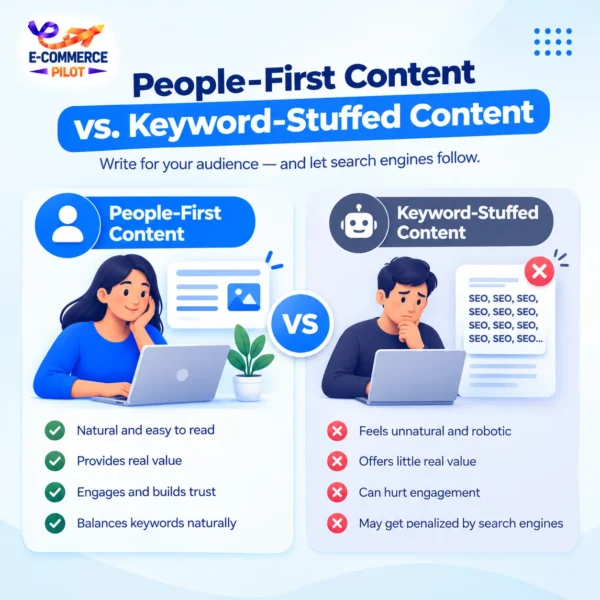
People-first content solves a problem without forcing readers to work through unnecessary details. AI Search Writing should support this principle rather than encourage writers to produce pages only for search engines. Start with the most important information, explain the reasoning, and add examples where they help. Additionally, remove sentences that repeat the same idea.
Use these writing practices:
- Choose familiar words and short sentences.
- Explain technical terms when they first appear.
- Include examples, steps, or comparisons.
- Use active voice to make instructions clear.
- Answer common questions without adding filler.
Structure Content for AI Search Visibility
Clear formatting helps readers scan a page and understand how its sections connect. It also makes the relationships between ideas easier for search systems to interpret. Use one descriptive H1, followed by relevant H2 headings and H3 subheadings where needed. In addition, keep paragraphs focused on one main idea.
Use Clear Headings and Direct Answers
Write headings that describe the information below them. When answering a specific question, provide a concise response near the beginning of that section. Then add context, evidence, or examples to explain the answer fully.
Add Lists, Tables, and FAQs
Use bullet points for steps and tables for comparisons. FAQs can address genuine questions that the main article does not fully cover. However, do not add questions simply to repeat keywords or increase page length.
Use Keywords and Related Search Terms Naturally
Keywords help writers understand the language people use to find information. However, repeating the same phrase in every paragraph can make content difficult to read. Instead, use the main keyword in the title, introduction, relevant headings, and conclusion. Add related terms when they fit the meaning and context.
For this topic, related terms include AI search optimization, generative search, search intent, semantic SEO, helpful content, natural language queries, and content quality.
Build a Keyword Map
Assign each page a clear primary topic and supporting terms. For example, an article about AI Search Writing can target content structure, reader intent, and AI search visibility. Separate pages can cover technical SEO or schema markup in greater depth. This approach reduces unnecessary overlap and helps each page serve a distinct purpose.
Build Trust With Accurate, Original Information
Useful content needs more than clear formatting. Readers also need reliable facts, practical experience, and honest explanations. Therefore, verify claims, link to credible sources, and update information when it changes. When appropriate, include author details, original research, examples, or real case studies.
Avoid unsupported statistics and invented experience. If you use AI tools to prepare a draft, review the facts and add genuine value before publishing. AI Search Writing should reflect your business knowledge rather than produce generic text that looks like every competing page.
Optimize Content for Traditional SEO and AI Search
Strong content still needs a technically accessible website. Search engines must be able to find, crawl, and understand your pages. Accordingly, combine useful writing with established SEO practices rather than treating AI search as a replacement for them.
Focus on these areas:
- Technical SEO: Check indexing, crawlability, mobile usability, and page performance.
- On-page SEO: Improve titles, headings, internal links, and descriptive image alt text.
- Structured data: Use relevant schema markup to describe supported page details accurately.
- Internal linking: Connect related articles and service pages using descriptive anchor text.
- Content accessibility: Keep important information available as readable text.
Structured data can clarify page details, but it does not guarantee citations in AI answers. Likewise, there is no special keyword formula that guarantees inclusion in an AI-generated response.
Common Content Writing Mistakes to Avoid
Some businesses publish large amounts of content without checking whether it helps readers. Others repeat keywords, copy competitors, or rely on AI-generated drafts without meaningful review. These practices can reduce quality and weaken trust. Instead, prioritize useful information and clear answers over content volume.
Avoid these common mistakes:
- Writing for algorithms instead of readers.
- Adding keywords where they sound unnatural.
- Publishing unverified facts or statistics.
- Creating several pages that target the same search intent.
- Using long introductions that delay the main answer.
- Expecting instant rankings or guaranteed AI citations.
Measure Content Performance and Improve Results
Content optimization continues after publication. Review performance to understand whether your pages attract relevant visitors, answer their questions, and support business goals. Google Search Console can show search impressions, clicks, and queries, while analytics tools can help assess engagement and conversions.
Track organic traffic, relevant search queries, leads, and sales. Where available, also monitor referral visits from AI platforms and mentions or citations in AI search responses. However, remember that tracking methods and reporting coverage vary across platforms.
Review important pages regularly. Update outdated facts, improve weak sections, add missing examples, and strengthen internal links. Over time, these changes can help maintain content quality and support better search performance.
Conclusion
Successful content in 2026 must serve people first while remaining clear and accessible to search systems. AI Search Writing brings these goals together through useful answers, logical headings, natural keywords, accurate information, and sound SEO practices. Although no technique guarantees rankings or AI citations, consistent quality gives your content a stronger foundation for long-term visibility.
Want content that connects with readers and supports your search goals? Contact Ecommerce Pilot for SEO content writing and optimization services that help your business attract relevant traffic and generate leads.