
What will you learn?
Why Ecommerce SEO Matters
SEO helps your online store appear when customers search for products. Although paid ads can bring quick traffic, organic search provides long-term value and reduces marketing costs. In addition, higher rankings build trust and attract visitors who are already interested in your products. As a result, a strong SEO strategy supports better traffic and more sales.
Technical SEO Checklist
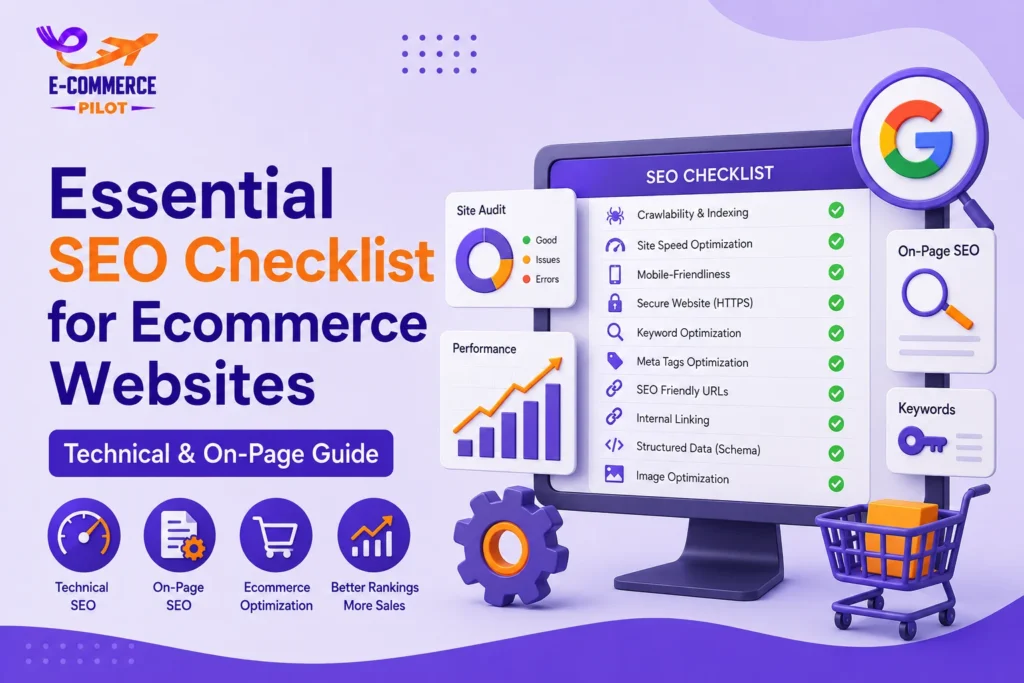
Technical SEO ensures your ecommerce website works efficiently for both users and search engines. Even the best content may struggle to rank if pages load slowly or cannot be indexed correctly. Therefore, checking your website’s technical health should be part of your regular SEO routine.
Improve Website Speed
Fast websites keep visitors engaged and reduce bounce rates. Compress large images, enable browser caching, reduce unnecessary code, and choose reliable hosting. These improvements also support Core Web Vitals, which influence search performance.
Make Your Website Mobile-Friendly
Most online shoppers use smartphones to browse products. Therefore, your website should use responsive design, readable text, and simple navigation. Every page should display correctly across different screen sizes to improve usability.
Secure Your Website with HTTPS
Website security protects customer information and increases trust. HTTPS also acts as a ranking factor, making it an important part of technical SEO. Check that every page loads securely without security warnings.
Fix Crawl Errors and Broken Links
Broken links create a poor user experience and make it harder for search engines to crawl your website. Review crawl reports regularly, repair 404 pages, remove unnecessary redirects, and update outdated links to maintain a healthy website.
Create XML Sitemap and Robots.txt
An XML sitemap helps search engines find important pages faster. Meanwhile, the robots.txt file tells search engine bots which sections of your website they should crawl and which they should avoid. Both files improve website organization and indexing.
Use Canonical Tags
Many ecommerce stores have similar product pages because of size, color, or filter options. Canonical tags tell search engines which page is the preferred version. As a result, duplicate content issues are reduced, and ranking signals stay focused on the correct page.
On-Page SEO Checklist
On-page SEO helps search engines understand the purpose of every page while making content easier for visitors to read. It also improves keyword relevance and encourages users to continue exploring your website. A well-optimized page increases the chance of ranking for valuable search terms.
Optimize Title Tags and Meta Descriptions
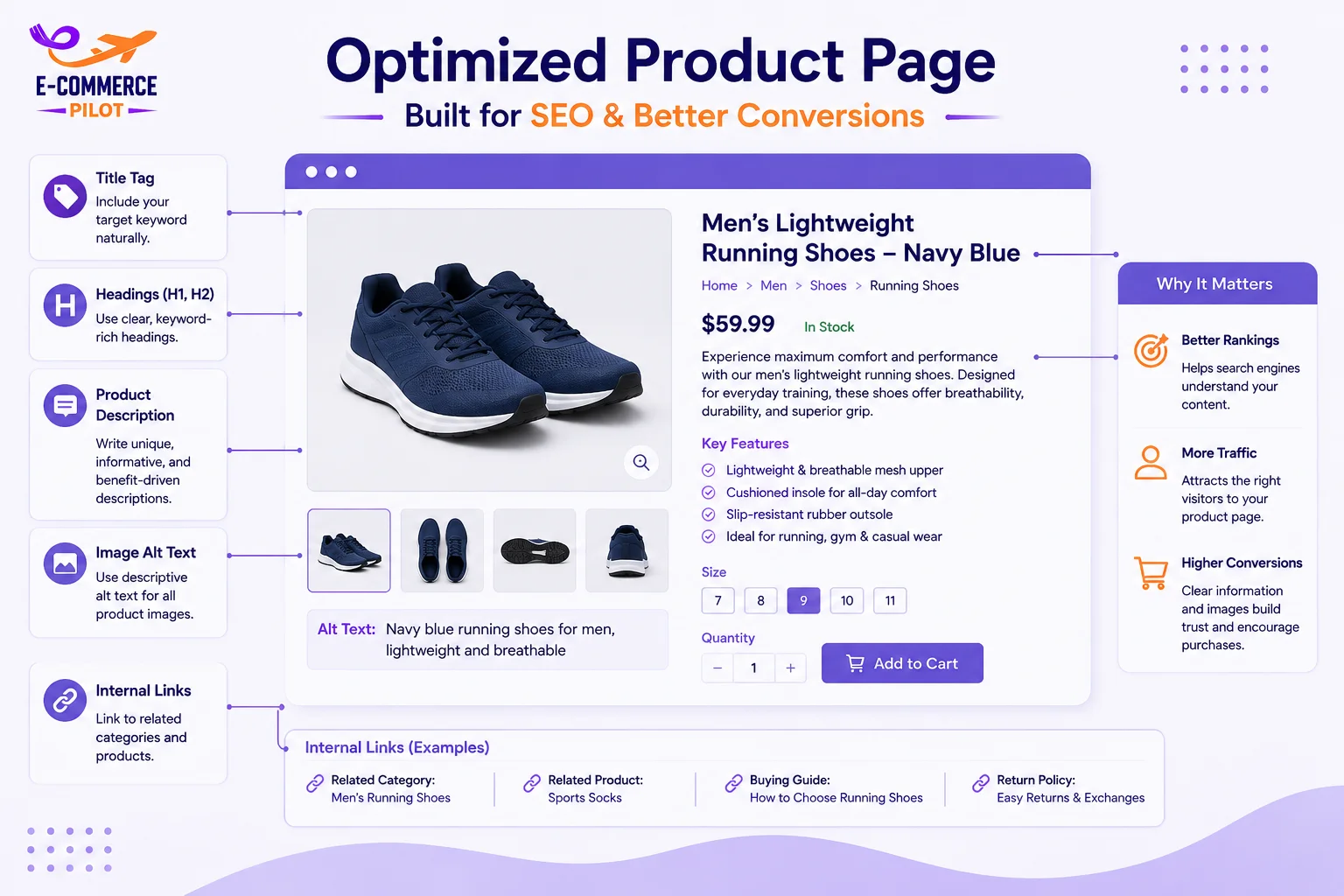
Every page should have a unique title tag and meta description. Include your primary keyword naturally and write compelling copy that encourages users to click. Clear metadata improves search visibility and click-through rates.
Write SEO-Friendly Product Descriptions
Avoid using copied manufacturer descriptions. Instead, create original content that explains product features, benefits, specifications, and common uses. Include relevant keywords naturally without stuffing them into the text.
Optimize Category Pages
Category pages often rank for high-value keywords because they group similar products under one topic. Therefore, add a short introduction, include relevant keywords naturally, and organize products with clear navigation. You should also link related categories to help visitors and search engines move through your website more easily.
Use Header Tags Properly
A clear heading structure improves readability and helps search engines understand your content. Use one H1 for the page title, followed by H2 and H3 headings for different sections. In addition, keep headings descriptive and relevant to the page topic so users can quickly find the information they need.
Optimize Images
Images improve the shopping experience, but they should also support SEO. Use descriptive file names, write meaningful alt text, compress image sizes, and choose modern formats where possible. As a result, pages load faster while remaining accessible to all users.
Build Internal Links
Internal links connect products, categories, and blog posts throughout your website. They help visitors find related information while guiding search engines to important pages. Moreover, a strong internal linking structure distributes page authority and improves website navigation.
Common Ecommerce SEO Mistakes
Many ecommerce websites lose valuable traffic because of avoidable SEO mistakes. Duplicate content, missing title tags, slow-loading pages, broken links, and thin category pages often reduce search visibility. Likewise, missing image alt text and poor internal linking make it harder for search engines to understand your website. Regular SEO audits help identify these issues early, allowing you to fix them before they affect rankings and user experience.
SEO Tools to Track Performance
Monitoring SEO performance helps you understand what is working and where improvements are needed. Google Search Console shows indexing issues and keyword performance, while Google Analytics tracks visitor behavior. PageSpeed Insights measures loading speed, and Screaming Frog identifies technical problems such as broken links and missing metadata. Reviewing these reports regularly helps maintain a healthy website and supports steady organic growth.
Conclusion
Following a complete Ecommerce SEO Checklist helps improve your website’s technical health and on-page optimization while supporting higher search rankings. Regular updates, quality content, fast page speed, and proper website structure all contribute to long-term success. In addition, monitoring your SEO performance helps you identify new opportunities and fix issues before they affect traffic. By reviewing your Ecommerce SEO Checklist regularly, your online store can attract more qualified visitors, improve user experience, and generate consistent organic sales.
Let Ecommerce Pilot optimize your ecommerce website with proven SEO strategies that help you gain more traffic, better rankings, and higher sales. Contact us today to get started!