
What will you learn?
Understanding Private Label and White Label Products
Before choosing a business model, it is important to understand how each option works. Although both approaches involve third-party manufacturing, they serve different purposes. Some businesses focus on creating a unique brand identity, while others prioritize speed and affordability. As a result, selecting the right model can have a direct impact on long-term growth and profitability.
What Is a Private Label Product?
A private label product is manufactured by a third-party supplier and sold exclusively under one company’s brand. The seller usually has control over packaging, product features, ingredients, and overall presentation. Because of this flexibility, businesses can create products that stand out from competitors. Furthermore, private label products help companies build stronger brand recognition over time.
What Is a White Label Product?
A white label product is a ready-made product that multiple businesses can purchase and sell under their own branding. The manufacturer creates a standard product and allows different companies to rebrand it. Therefore, businesses can enter the market quickly without spending time on product development. However, customization options are generally limited.
Why Businesses Compare These Models
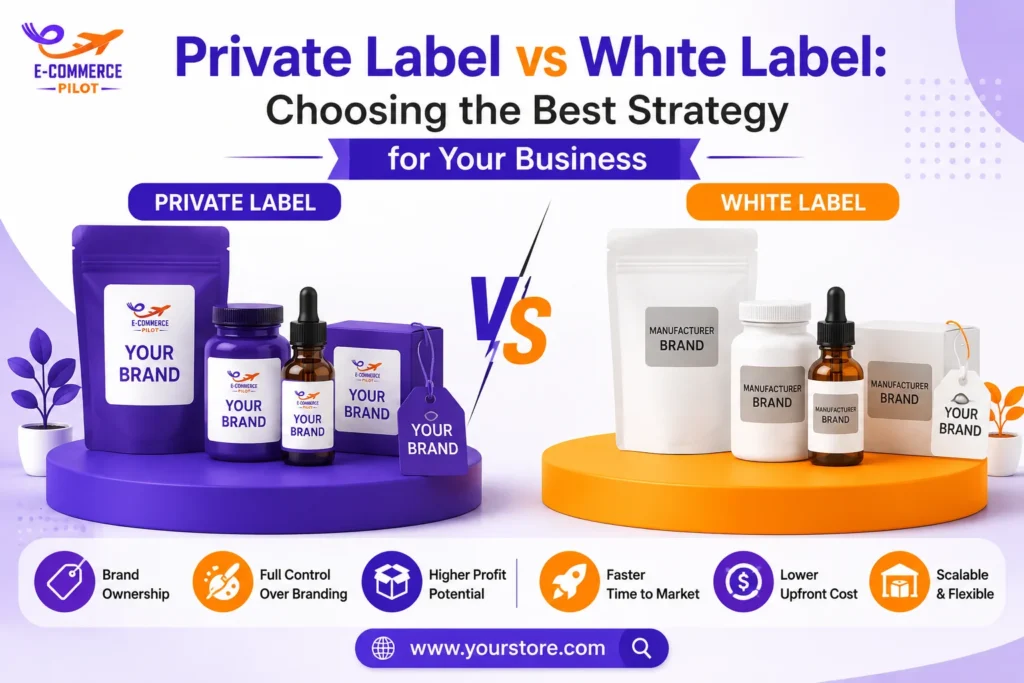
Businesses often compare these models because both provide opportunities to launch products without manufacturing them directly. While private label products offer exclusivity and customization, white label products provide speed and lower costs. Consequently, the right choice depends on business goals, available resources, and market demands.
Key Differences Between Private Label and White Label
Although both business models appear similar at first glance, several important differences separate them. These differences affect product uniqueness, startup costs, marketing strategies, and competition levels. Therefore, understanding these factors can help businesses make informed decisions.
Product Customization
One of the biggest differences is customization. Private label products allow businesses to modify packaging, ingredients, features, and designs according to their requirements. In contrast, white label products usually offer minimal customization because the same product is sold to multiple businesses. As a result, private label brands often have a more unique market presence.
Brand Exclusivity
Private label products are exclusive to one brand. This means competitors cannot sell the exact same product. Consequently, businesses gain a competitive advantage and stronger customer loyalty. White label products, however, may be sold by several companies, making differentiation more difficult.
Time to Market
White label products can be launched much faster because development and production processes already exist. Therefore, businesses can start selling within a shorter timeframe. Private label products require additional planning and customization, which may extend the launch period.
Initial Investment
Private label products generally require higher upfront costs due to customization and product development. Meanwhile, white label products have lower startup expenses. Because of this, many new businesses choose white label solutions when working with limited budgets.
Benefits of Private Label Products
Private label products offer several advantages for businesses looking to establish a strong market position. Although the investment may be higher, the long-term benefits often justify the cost. Moreover, businesses gain greater control over their products and branding.
Stronger Brand Identity
Private label products allow companies to create a unique brand image. Since the product is exclusive, customers can associate its quality and value directly with the brand. Therefore, businesses can build trust and increase customer loyalty more effectively.
Better Profit Margins
Because private label products are unique, businesses often have more pricing flexibility. As a result, they can charge premium prices and generate higher profit margins. This advantage becomes even more valuable as brand recognition grows.
Less Direct Competition
Since competitors cannot sell the same product, businesses face less direct competition. Consequently, they can focus on improving customer experiences rather than constantly lowering prices.
Benefits of White Label Products
White label products remain a popular option for startups and growing businesses. They provide an efficient way to enter the market while keeping costs under control. Additionally, they reduce the complexity of product development.
Faster Market Entry
White label products are already manufactured and tested. Therefore, businesses can begin selling much sooner than with private label products. This speed is especially valuable in competitive markets.
Lower Startup Costs
Developing a custom product can be expensive. White label products eliminate many of these expenses, allowing businesses to launch with less capital. As a result, financial risk is reduced.
Easier Scaling
Manufacturers already have established production systems in place. Therefore, businesses can increase order volumes quickly when demand grows. This makes scaling operations much simpler.
Private Label vs White Label Cost Comparison
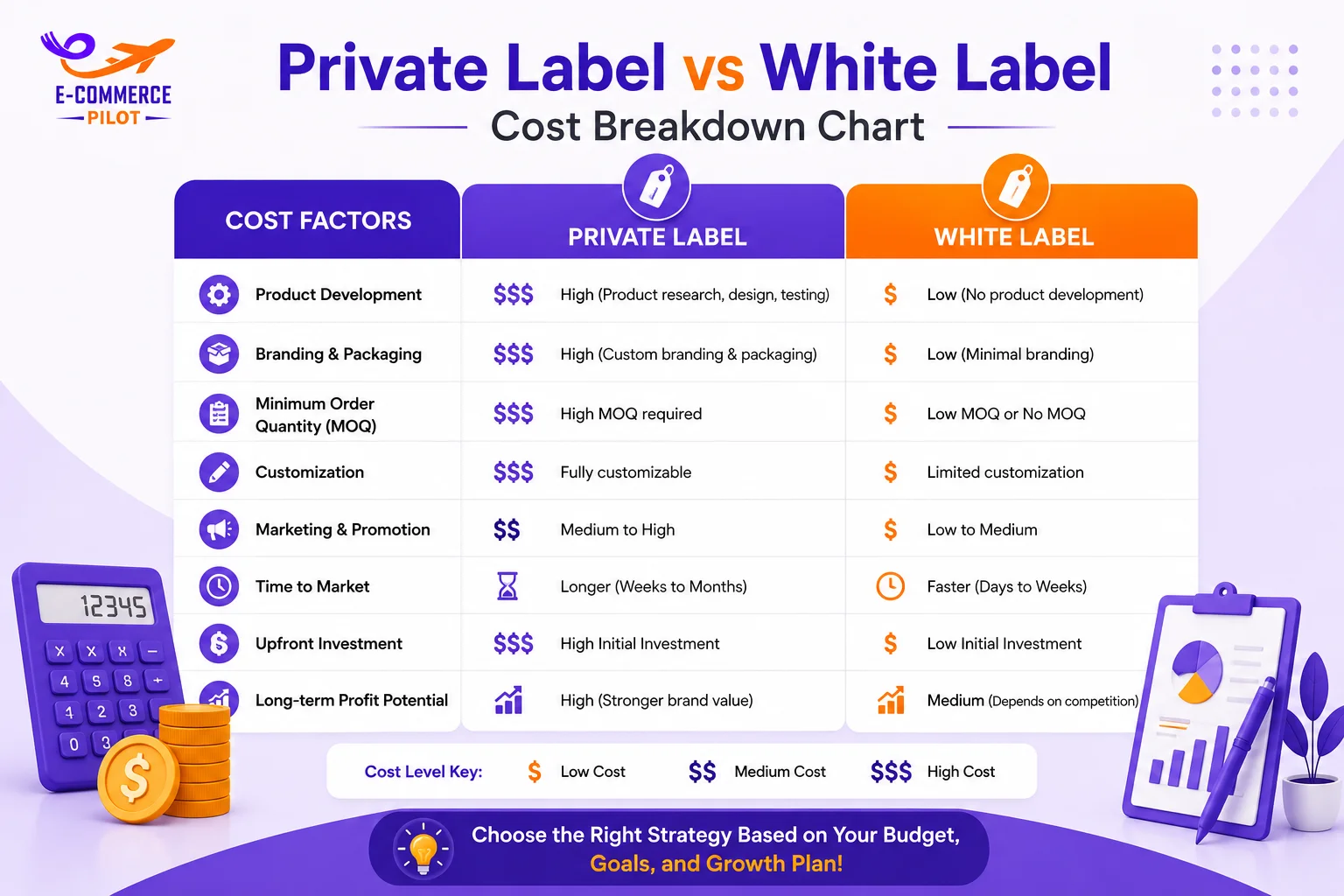
Cost is often a major factor when selecting a product strategy. While private label products require a larger investment, they may deliver stronger returns over time. On the other hand, white label products offer affordability and simplicity.
Manufacturing Costs
Private label products usually involve additional costs related to customization, packaging, and product development. Meanwhile, white label products benefit from existing production processes, reducing manufacturing expenses.
Marketing Expenses
Private label brands often require more initial marketing to establish awareness. However, unique products can create stronger customer loyalty. White label products may need continuous marketing efforts because similar products exist in the market.
Long-Term Profit Potential
Although private label products cost more upfront, they often provide higher long-term profitability. Therefore, businesses focused on building a lasting brand may find this model more rewarding.
Branding Opportunities in Both Models
Branding plays an important role in business success. Therefore, companies should carefully evaluate how much control they want over product identity before making a choice.
Private Label Branding Advantages
Private label products allow businesses to create unique packaging, messaging, and product features. Consequently, brands can develop stronger customer relationships and a more memorable market presence.
White Label Branding Advantages
White label products still allow businesses to build a recognizable brand. However, differentiation can be challenging because competitors may offer similar products under different names.
Choosing the Right Strategy for Your Business
The right choice depends on your goals, budget, and growth plans. Businesses seeking uniqueness and long-term brand value often prefer private label products. Meanwhile, companies that want quick results may benefit more from white label solutions.
Choose Private Label If
- You want exclusive products.
- You plan to build a long-term brand.
- You need greater product control.
- You can invest more upfront.
Choose White Label If
- You need a faster launch.
- You have a limited budget.
- You want lower startup risk.
- You prefer simpler operations.
Conclusion
When comparing Private Label vs White Label, the best choice depends on your business objectives. Private label products offer exclusivity, stronger branding, and better profit potential, while white label products provide lower costs and faster market entry. Therefore, businesses should evaluate their budget, target audience, and growth plans before making a decision. By choosing the right strategy, you can build a successful brand and create long-term opportunities in your market.
Ready to launch and grow your ecommerce brand? Let our experts help you choose the right product strategy and achieve faster business growth today.