
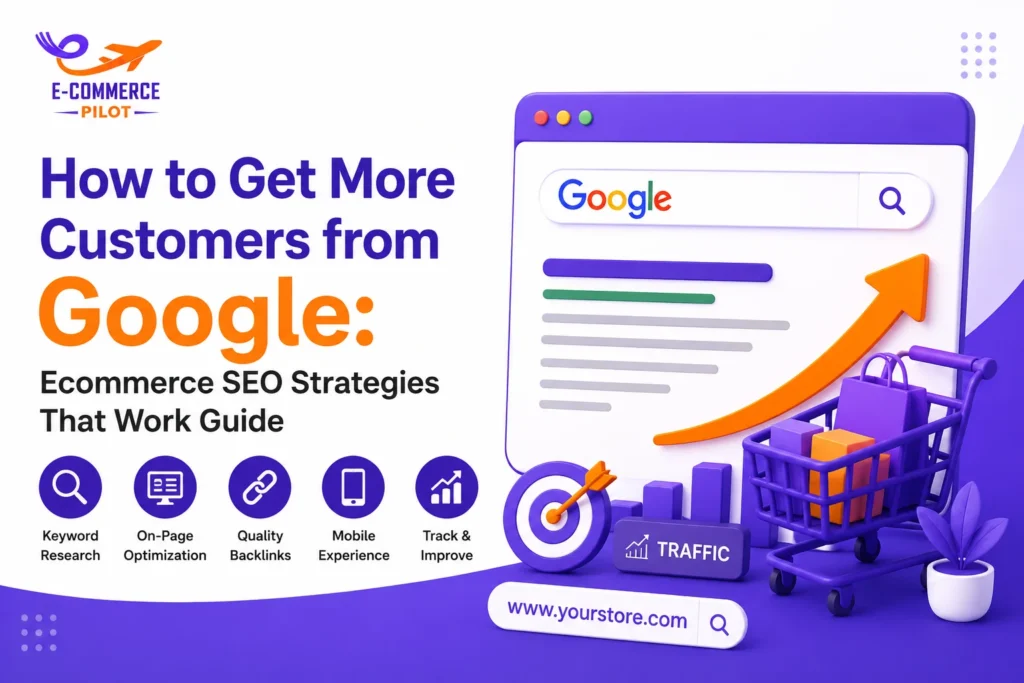
What will you learn?
Why Google Matters for Ecommerce Growth
Google remains one of the largest sources of online traffic for ecommerce businesses. People use search engines every day to compare products, find solutions, and make buying decisions. Therefore, businesses that rank well can attract highly targeted visitors who already have purchase intent.
In addition, Google traffic often produces consistent results over time. Unlike paid advertising, organic rankings can continue generating visitors even when ad spending stops. As a result, ecommerce SEO becomes an important investment for sustainable business growth.
Understanding Customer Search Behavior
Before optimizing a store, it is important to understand how customers search online. Buyers usually begin with questions, comparisons, or product-specific searches. Therefore, your content should align with each stage of the buying journey.
When you know what customers are searching for, you can create pages that answer their needs. Consequently, search engines become more likely to show your website to relevant users.
Benefits of Organic Search Traffic
Organic traffic brings visitors who actively seek information or products. Therefore, these users often convert better than audiences reached through interruption-based advertising.
Furthermore, strong organic visibility increases brand credibility. When customers repeatedly see your store in search results, they become more likely to trust and purchase from your business.
Build a Strong Ecommerce SEO Foundation
A successful SEO campaign starts with a solid foundation. Without proper research and planning, even high-quality content may struggle to rank. Therefore, every ecommerce store should begin by understanding keywords, competitors, and customer intent.
Building a foundation also helps avoid costly mistakes later. As a result, your SEO efforts become more focused and effective.
Understand Search Intent
Search intent explains why users perform a search. Some people seek information, while others want to compare products or complete a purchase.
Therefore, every page should match the intent behind the keyword. When search intent and page content align, rankings and conversions often improve.
Perform Keyword Research
Keyword research helps identify terms your audience uses. Focus on commercial, informational, and transactional keywords that relate to your products.
Additionally, include long-tail keywords because they often have lower competition. As a result, they can bring highly targeted visitors to your store.
Analyze Competitors
Competitor analysis helps identify opportunities and gaps in your market. By reviewing top-ranking competitors, you can learn which keywords and content strategies work best.
Moreover, competitor research can reveal backlink opportunities and content topics worth targeting.
Get More Customers from Google with On-Page SEO
On-page SEO helps search engines understand your content. At the same time, it improves the user experience for visitors. Therefore, optimizing pages correctly can directly impact rankings and sales.
Every important page should follow SEO best practices. As a result, search engines can crawl, index, and rank your content more effectively.
Improve Product Pages
Product pages should contain unique descriptions, relevant keywords, and clear product benefits. Additionally, include high-quality images and customer reviews whenever possible.
Detailed product information helps users make decisions. Consequently, conversion rates often improve alongside search visibility.
Optimize Category Pages
Category pages target broader search terms and help users navigate your store. Therefore, include helpful introductory content and descriptive headings.
Well-optimized category pages often rank for competitive keywords. As a result, they can drive substantial organic traffic.
Write Effective Meta Tags
Meta titles and descriptions influence click-through rates from search results. Therefore, they should be clear, compelling, and keyword-focused.
Although meta tags do not guarantee rankings, they can increase traffic by encouraging more users to click.
Create Content That Brings Customers
Content marketing supports ecommerce SEO by attracting visitors during the research stage. Furthermore, useful content helps build trust with potential buyers.
Businesses that publish valuable content regularly often gain more organic visibility. Therefore, content should be a key part of every SEO strategy.
Blogging for Ecommerce
Blog posts help target informational keywords that product pages may not cover. As a result, they expand your reach across different search queries.
Additionally, blogs create opportunities for internal linking, which strengthens website structure and authority.
Product Buying Guides
Buying guides help customers compare options and make informed decisions. Therefore, they often perform well in search results.
These guides can also direct readers toward product pages. Consequently, they support both SEO and conversions.
FAQs and Helpful Resources
FAQ pages answer common customer questions and improve user experience. Moreover, they may appear in rich search results.
Providing clear answers helps users trust your brand. As a result, engagement and conversions can increase.
Improve Technical SEO Performance
Technical SEO ensures that search engines can access and understand your website properly. Without strong technical performance, other SEO efforts may not reach their full potential.
Therefore, ecommerce businesses should regularly audit technical issues and fix them quickly.
Website Speed Optimization
Fast websites provide a better user experience and reduce bounce rates. Therefore, optimize images, use caching, and minimize unnecessary scripts.
Improved speed often leads to stronger engagement and better rankings.
Mobile Optimization
Most online shoppers browse on mobile devices. Therefore, your website should provide a smooth mobile experience.
Responsive design and easy navigation help users complete purchases more efficiently.
Site Structure and Navigation
A clear website structure helps users and search engines find important pages. Therefore, organize products into logical categories and use internal links effectively.
Strong navigation improves crawlability and overall usability.
Strengthen Authority Through Link Building
Backlinks remain an important ranking factor because they signal trust and authority. Therefore, ecommerce businesses should focus on acquiring quality links from relevant websites.
However, quality matters more than quantity. As a result, a few strong backlinks can outperform many low-quality ones.
Earn Quality Backlinks
Create useful resources that other websites want to reference. In addition, publish original research, guides, and industry insights.
Helpful content naturally attracts links over time.
Partner with Industry Websites
Partnerships with bloggers, influencers, and industry publications can generate valuable backlinks. Therefore, relationship building should be part of your SEO plan.
These partnerships can also increase brand exposure.
Use Digital PR
Digital PR helps businesses gain mentions from reputable websites. Consequently, it improves both visibility and authority.
Media coverage can produce long-term SEO benefits.
Track SEO Performance and Results
SEO requires ongoing monitoring and adjustments. Therefore, businesses should regularly review performance metrics and identify improvement opportunities.
Data-driven decisions help maximize results over time.
Important SEO Metrics
Monitor organic traffic, keyword rankings, conversion rates, and click-through rates. These metrics provide valuable insights into campaign performance.
Analytics Tools
Use Google Analytics and Google Search Console to track website performance. These tools help identify technical issues and growth opportunities.
Continuous Improvements
SEO is an ongoing process. Therefore, regularly update content, improve pages, and refine strategies based on data.
Common Ecommerce SEO Mistakes to Avoid
Many ecommerce businesses overlook important SEO fundamentals. Consequently, rankings and traffic may suffer unnecessarily.
Common mistakes include duplicate content, slow page speed, poor keyword targeting, and weak internal linking. Therefore, regular audits are essential to maintain strong performance and avoid ranking losses.
Conclusion
SEO remains one of the most effective ways to grow an online store and attract qualified buyers. By focusing on keyword research, content creation, technical SEO, on-page optimization, and link building, ecommerce businesses can build long-term visibility. Most importantly, businesses that consistently apply these strategies are more likely to Get More Customers from Google and achieve sustainable growth through organic search.
Want more customers and higher Google rankings for your online store? Let our ecommerce SEO experts create a results-focused strategy that helps your business grow faster. Contact us today!